

PUNK CODING (1/3)
On using the attention frackers’ tools against them
For thirty years, customizing your interface to the internet meant knowing how to write code, and the people who designed the UX and algorithms that define social media feeds had the only vote that counted. Now, through "vibe coding," someone with no engineering background can put a working tool into the world in an afternoon. What opportunities does this shift present? Is the early-web dream of “fixing the internet” now feasible? How wary should we be of these tools, seeing as they are constructed by the attention frackers themselves?
We will read across the media thinkers who saw this coming, from Marshall McLuhan and Neil Postman through Zeynep Tufekci, and we take up Jaron Lanier's argument for data dignity alongside the current case for federated social media and middleware.
We will also build. As a group, we’ll construct wrappers around the most exploitative platforms we use: interfaces that replace the algorithmic Skinner box of platforms like Instagram, TikTok, or YouTube with something that empowers us with more intentional choice. As we do so, we will critically examine the quandary of using the master’s tools on the master’s house. Culture jamming has always worked on borrowed infrastructure, and the infrastructure has never been this borrowable (though we might break some terms of service)!
No coding experience required. That is the whole point.
Led by Brian Rosen, longtime Pixar technologist and now a research scientist at Google X, The Moonshot Factory.
Our courses cost $250, with a Supporter rate for students with an income above 100k. We also offer a Supported rate for students with constraining circumstances.
Please see our Refund Policy HERE.
Additionally, we offer three tuition-waiver scholarships per course. To apply for a scholarship, click HERE.
Photo by Andre Moura
![ATTENTION ACTIVISM 201 [ONLINE] (Session 1/3)](https://images.squarespace-cdn.com/content/v1/647e2e2c944dab371f654149/1761762662497-W61R3OUGOX8RUT19IQMR/Untitled+design+%281%29.png)
ATTENTION ACTIVISM 201 [ONLINE] (Session 1/3)
ATTENTION ACTIVISM is the collective movement to push back against the commodification of human attention — what we call "human fracking" — and create, space by community space, a world where we can flourish. In this training, we will explore practical strategies for ATTENTION ACTIVISM, drawing on texts by bell hooks, Paulo Freire, and Deva Woodly. In the 201 training, we will focus on developing the organizing, facilitation, and movement-building skills required to build groups for ATTENTION ACTIVISM. The bulk of the course will be dedicated to supporting participants toward an organizing project in their own communities.
Completion of our Attention Activism 101 seminar is required for participation in our 201 training. Participants who complete Attention Activism 201 will be eligible for inclusion in our national organizing coalition.
Wednesdays, 7-8:45pm EST
December 3, 10, and 17
On Zoom

RADICAL TRASH STUDIES (2/3)
On the social construction of trash
If you place attention on something, does it stop being trash? Is there waste only where there's no attention?
This seminar takes that question and gets our hands dirty with it. Drawing on geographer Vinay Gidwani's work on India's "waste-value dialectic," alongside artist Mierle Laderman Ukeles's Maintenance Artist and its insistence that unseen labor deserves witness, we'll build our own practice of sustained, unglamorous noticing. Students will keep a waste log, transform a piece of their own discarded material by hand into dye, into stock, and into structure. We'll close the course with a group exhibition built entirely from what got reclaimed.
The seminar also draws on fieldwork from Bangalore's construction-waste economy (Baka, Doherty, Butt) and returns often to Dante, whose Inferno remains one of literature's oldest arguments that waste is a location, not a substance. We will ask: is there really an “away” to throw things to? By the end, we will have a richer, more flexible and personal relationship to what we discard.
Led by Shivani Lakshmi Aysola, founding principal of Shamba-la Studios and author of Dialectics of Debris, a study of Bangalore's construction waste landscape.
Tuesdays, 6:30-9:00pm
September 22-October 6
Our courses cost $250, with a Supporter rate for students with an income above 100k. We also offer a Supported rate for students with constraining circumstances.
Please see our Refund Policy HERE.
Additionally, we offer three tuition-waiver scholarships per course. To apply for a scholarship, click HERE.
Photo by Kai Pro
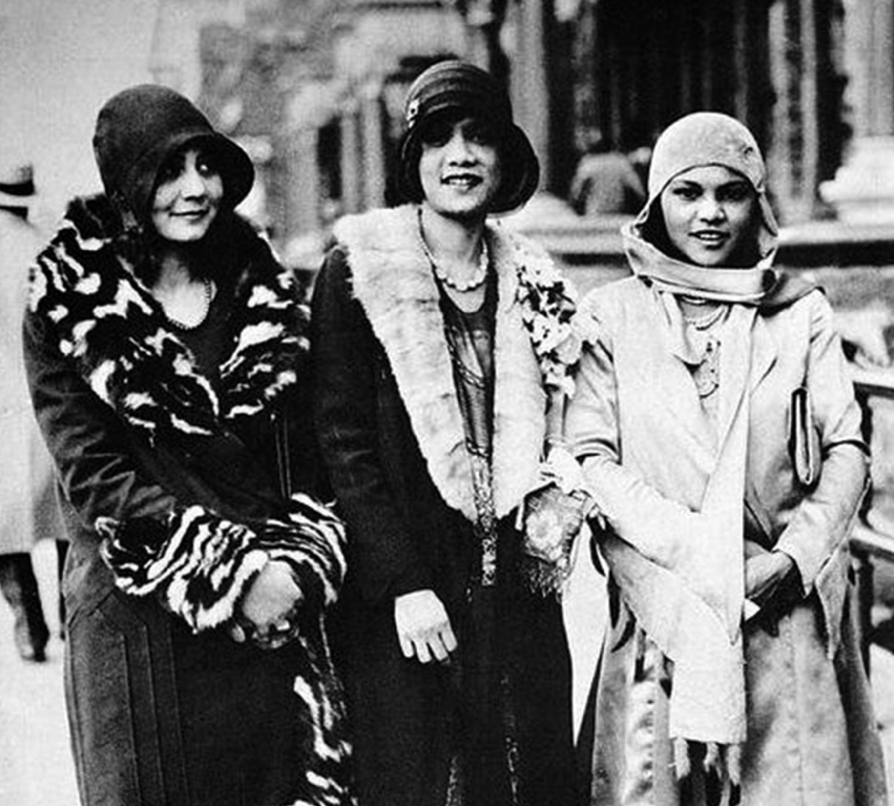
Sidewalk Study: STROLLING in STYLE
In 1920s Harlem, the “stroll” — a slow, deliberate procession of self-display — was meant to announce one’s arrival and presence within the community. Denied access to indoor space, Black New Yorkers turned city streets into stages, each outfit and gait a declaration of dignity in a city designed to deny it. What began as “defiant performances of freedom, dignity, self-worth, and cultural syncretism” over time became less a performance for the white gaze than a gift exchanged within the community.
Join us on the once-strolled streets of Harlem to trace the politics of dandyism, Black aesthetic modernism, and how walking, watching, and being seen could constitute a culture. Perhaps we may once again make the sidewalk sanctified ground…
Text: Monica L. Miller’s Slaves to Fashion: Black Dandyism and the Styling of Black Diasporic Identity
Date: Tuesday, September 29 at 7pm
Location: Harlem with Lindsee & Katie
SEEING, DRAWING, UNSEEING (3/3)
On figure drawing as a mode of attention
Drawing isn't simply a language of representation; it's also a way of paying attention.
Through sustained observation and a series of practical exercises, we will explore how drawing can interrupt familiar ways of seeing and make room for a slower, more attentive, and more intuitive engagement with the world. Drawing allows us to look before we judge or interpret.
The course will focus especially on figure drawing and its complex relationship with the body, with particular attention to the female body. The history of visual representation is also a history of power: who is allowed to look, who becomes the object of the gaze, and how bodies are made visible—or reduced to objects. By examining the act of looking itself, we will consider whether drawing can help us question some of these inherited habits and develop a different relationship with the body.
The seminar combines practical exercises with critical reflection. Its aim is not simply to produce a successful image, but to use drawing as a way of asking how we see, what we have been taught to see, and how we might begin to see differently.
Led by architect and educator Olímpia Solà Inaraja.
Wednesdays, 6:30-9:00pm
September 16-30
Our courses cost $250, with a Supporter rate for students with an income above 100k. We also offer a Supported rate for students with constraining circumstances.
Please see our Refund Policy HERE.
Additionally, we offer three tuition-waiver scholarships per course. To apply for a scholarship, click HERE.
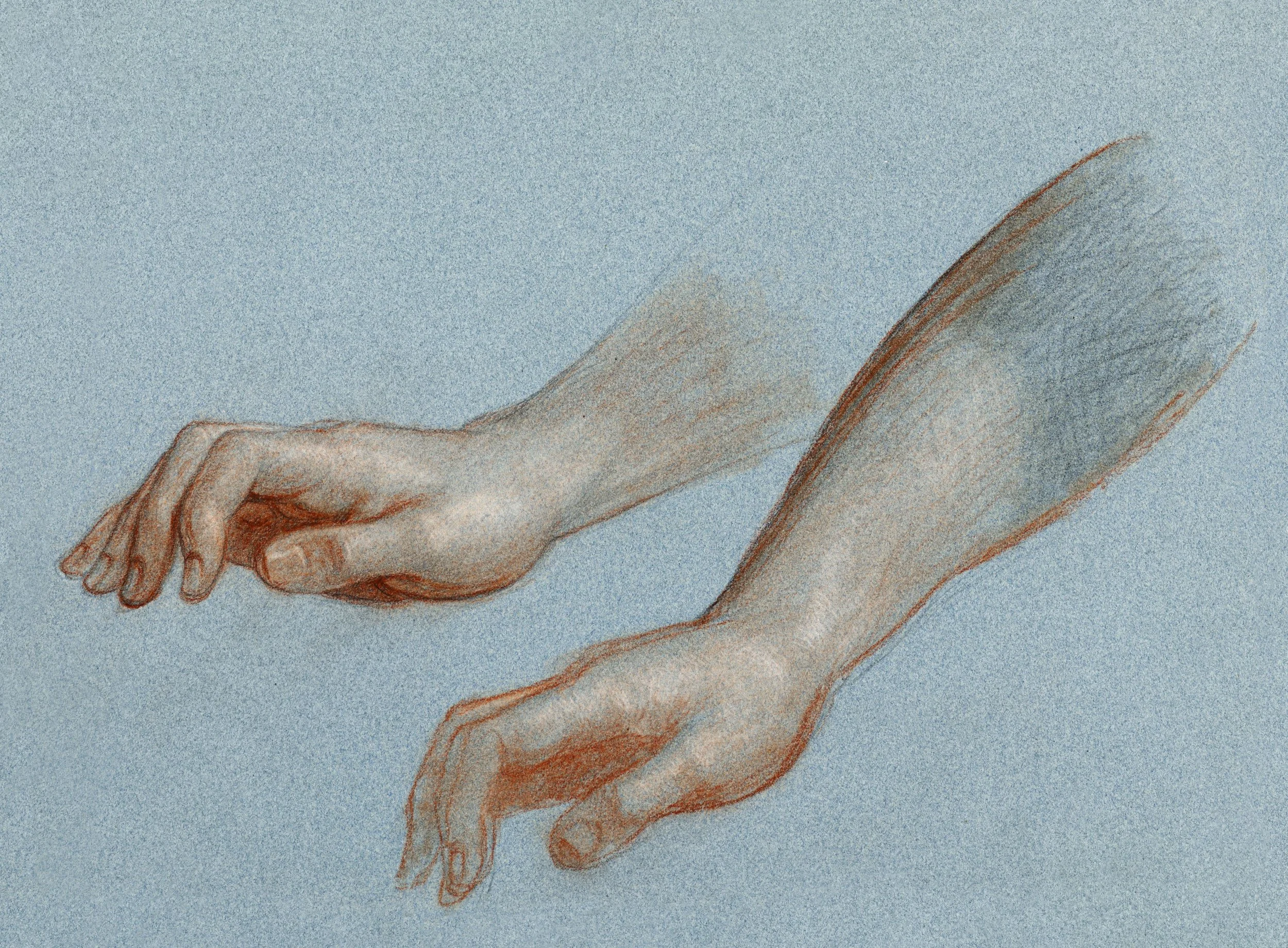
Image credit: Study of Angel's Hand for "Mercy's Dream" (1857) by Daniel Huntington. Original from The Smithsonian.
![ATTENTION ACTIVISM 101 [ONLINE] (Session 1/3)](https://images.squarespace-cdn.com/content/v1/647e2e2c944dab371f654149/1755618597294-KS67ESMC7FL8CZIBXMAX/Screenshot+2025-08-19+114824.png)
ATTENTION ACTIVISM 101 [ONLINE] (Session 1/3)
Attention is the touchstone problem of our age. Over the last twenty years, an unprecedented concentration of technical and financial power has successfully monetized human attention. The harms of this new system — in effect, the "fracking" of our most intimate selves — are familiar to all. Less widely understood is the nature of the movement that has emerged to fight back against this historic injustice: ATTENTION ACTIVISM.
In this course, we will survey the intellectual and practical foundations of the nascent ATTENTION ACTIVISM movement. We'll draw on texts by Karl Marx, Guy Debord, Shoshana Zuboff, Tim Wu, and Yves Citton among others. What do the extractive incursions of the Attention Economy mean for shared life in the twenty-first century — and how are communities of activists already working to resist them?
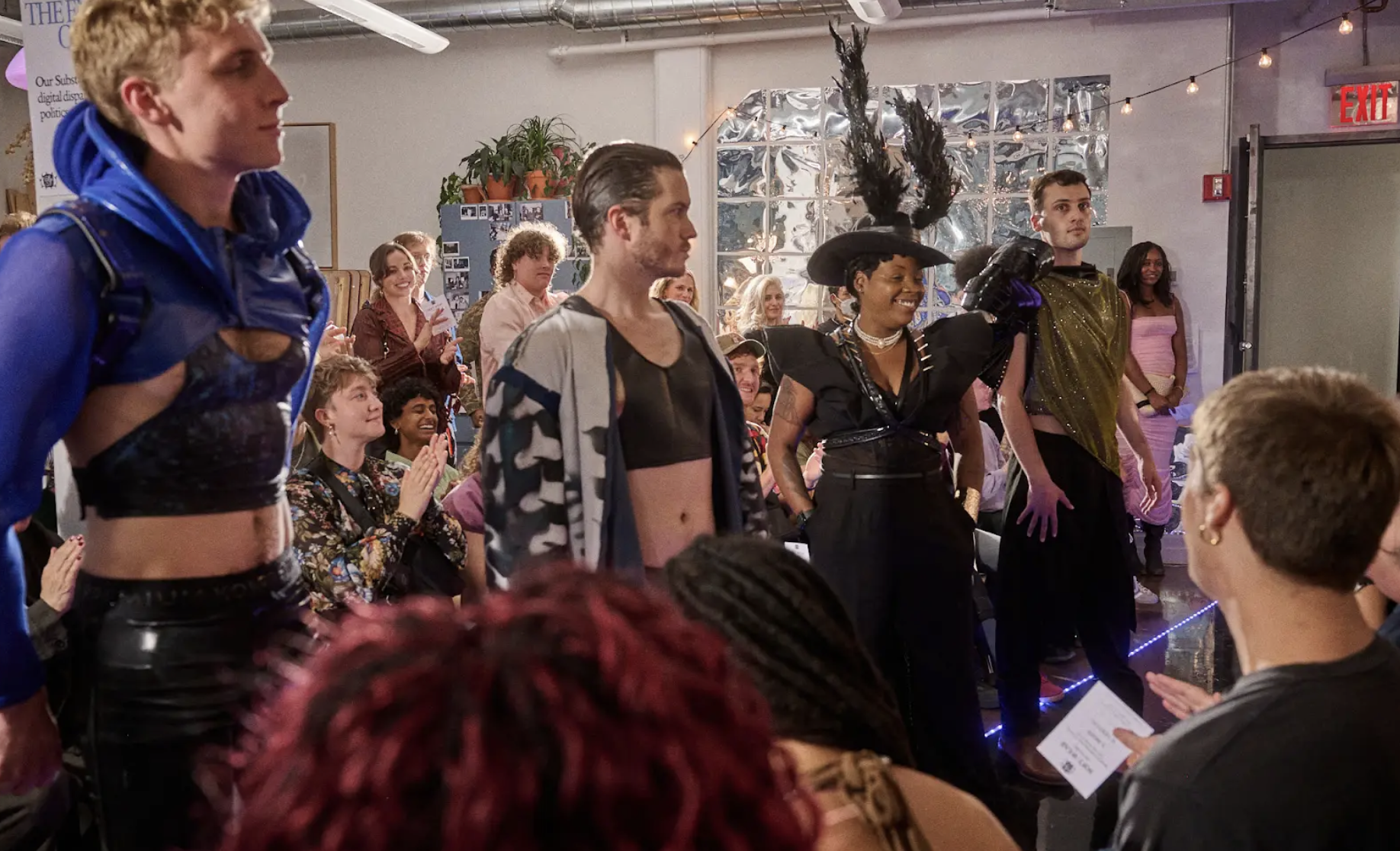
EYE-CATCH! Fashion Exhibition Opening
Join SoRA for the opening of our fall exhibition, EYE-CATCH! (October 1-30), presenting wearable pieces by Jianing Zhao, Nathalie San Fratello, Tanner Kok, Lexi Fujita, Dennis RedMoon Darkeem, and Kajal Ramrup that confront the monetization of attention in fashion. Visitors can enjoy a full video documentation of the fashion show on September 19 that showcased twenty looks in total from the designers, and observe the color, structure, and texture of selected pieces in close proximity. A collection of upcycled SoRA merch, screen-printed by Francesca Barr, will be available only for the night.
With a majority of the pieces constructed from secondhand or upcycled materials, EYE-CATCH! reaffirms that resistance to the commodification of our attention begins with our most intimate surroundings — by attending to the deep pasts, and possible futures embedded in the ways we clothe ourselves.
This is a free event. Light refreshments will be provided.
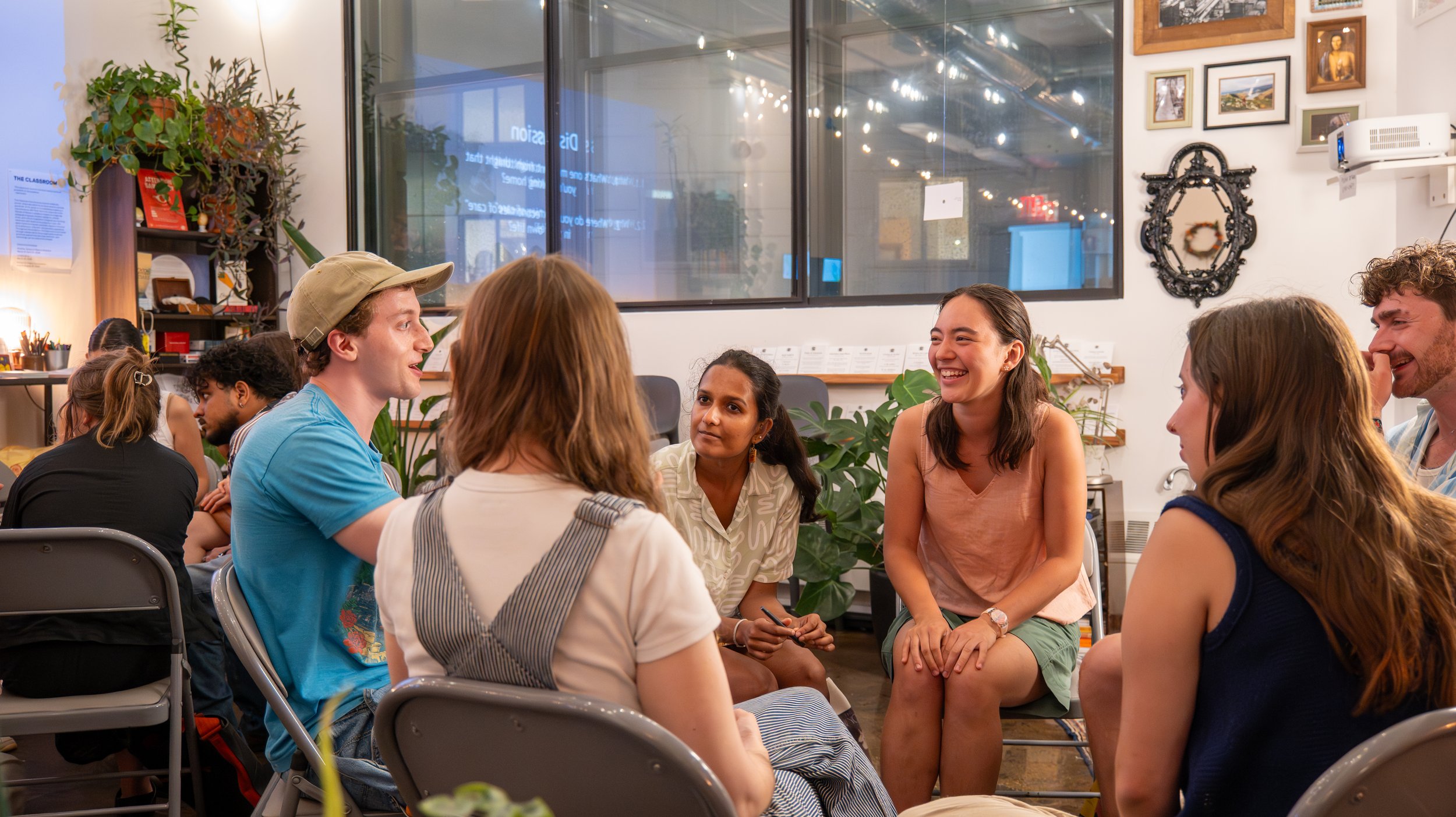
Attention Lab: FASHION
Attention Lab workshops are collective participatory experiments in the powers of human attention. Through group practices and guided discussions, we seek to understand what attention is, what it can do, and why it's worth protecting.
Everybody is an attention artist; all it takes is putting on clothes. In this Lab, we'll play with the relationship between style, presentation, and public space.
PUNK CODING (2/3)
On using the attention frackers’ tools against them
For thirty years, customizing your interface to the internet meant knowing how to write code, and the people who designed the UX and algorithms that define social media feeds had the only vote that counted. Now, through "vibe coding," someone with no engineering background can put a working tool into the world in an afternoon. What opportunities does this shift present? Is the early-web dream of “fixing the internet” now feasible? How wary should we be of these tools, seeing as they are constructed by the attention frackers themselves?
We will read across the media thinkers who saw this coming, from Marshall McLuhan and Neil Postman through Zeynep Tufekci, and we take up Jaron Lanier's argument for data dignity alongside the current case for federated social media and middleware.
We will also build. As a group, we’ll construct wrappers around the most exploitative platforms we use: interfaces that replace the algorithmic Skinner box of platforms like Instagram, TikTok, or YouTube with something that empowers us with more intentional choice. As we do so, we will critically examine the quandary of using the master’s tools on the master’s house. Culture jamming has always worked on borrowed infrastructure, and the infrastructure has never been this borrowable (though we might break some terms of service)!
No coding experience required. That is the whole point.
Led by Brian Rosen, longtime Pixar technologist and now a research scientist at Google X, The Moonshot Factory.
Our courses cost $250, with a Supporter rate for students with an income above 100k. We also offer a Supported rate for students with constraining circumstances.
Please see our Refund Policy HERE.
Additionally, we offer three tuition-waiver scholarships per course. To apply for a scholarship, click HERE.
Photo by Andre Moura
ATTENTION ACTIVISM 201 [ONLINE] (Session 2/3)
ATTENTION ACTIVISM is the collective movement to push back against the commodification of human attention — what we call "human fracking" — and create, space by community space, a world where we can flourish. In this training, we will explore practical strategies for ATTENTION ACTIVISM, drawing on texts by bell hooks, Paulo Freire, and Deva Woodly. In the 201 training, we will focus on developing the organizing, facilitation, and movement-building skills required to build groups for ATTENTION ACTIVISM. The bulk of the course will be dedicated to supporting participants toward an organizing project in their own communities.
Completion of our Attention Activism 101 seminar is required for participation in our 201 training. Participants who complete Attention Activism 201 will be eligible for inclusion in our national organizing coalition.
Wednesdays, 7-8:45pm EST
December 3, 10, and 17
On Zoom
RADICAL TRASH STUDIES (3/3)
On the social construction of trash
If you place attention on something, does it stop being trash? Is there waste only where there's no attention?
This seminar takes that question and gets our hands dirty with it. Drawing on geographer Vinay Gidwani's work on India's "waste-value dialectic," alongside artist Mierle Laderman Ukeles's Maintenance Artist and its insistence that unseen labor deserves witness, we'll build our own practice of sustained, unglamorous noticing. Students will keep a waste log, transform a piece of their own discarded material by hand into dye, into stock, and into structure. We'll close the course with a group exhibition built entirely from what got reclaimed.
The seminar also draws on fieldwork from Bangalore's construction-waste economy (Baka, Doherty, Butt) and returns often to Dante, whose Inferno remains one of literature's oldest arguments that waste is a location, not a substance. We will ask: is there really an “away” to throw things to? By the end, we will have a richer, more flexible and personal relationship to what we discard.
Led by Shivani Lakshmi Aysola, founding principal of Shamba-la Studios and author of Dialectics of Debris, a study of Bangalore's construction waste landscape.
Tuesdays, 6:30-9:00pm
September 22-October 6
Our courses cost $250, with a Supporter rate for students with an income above 100k. We also offer a Supported rate for students with constraining circumstances.
Please see our Refund Policy HERE.
Additionally, we offer three tuition-waiver scholarships per course. To apply for a scholarship, click HERE.
Photo by Kai Pro
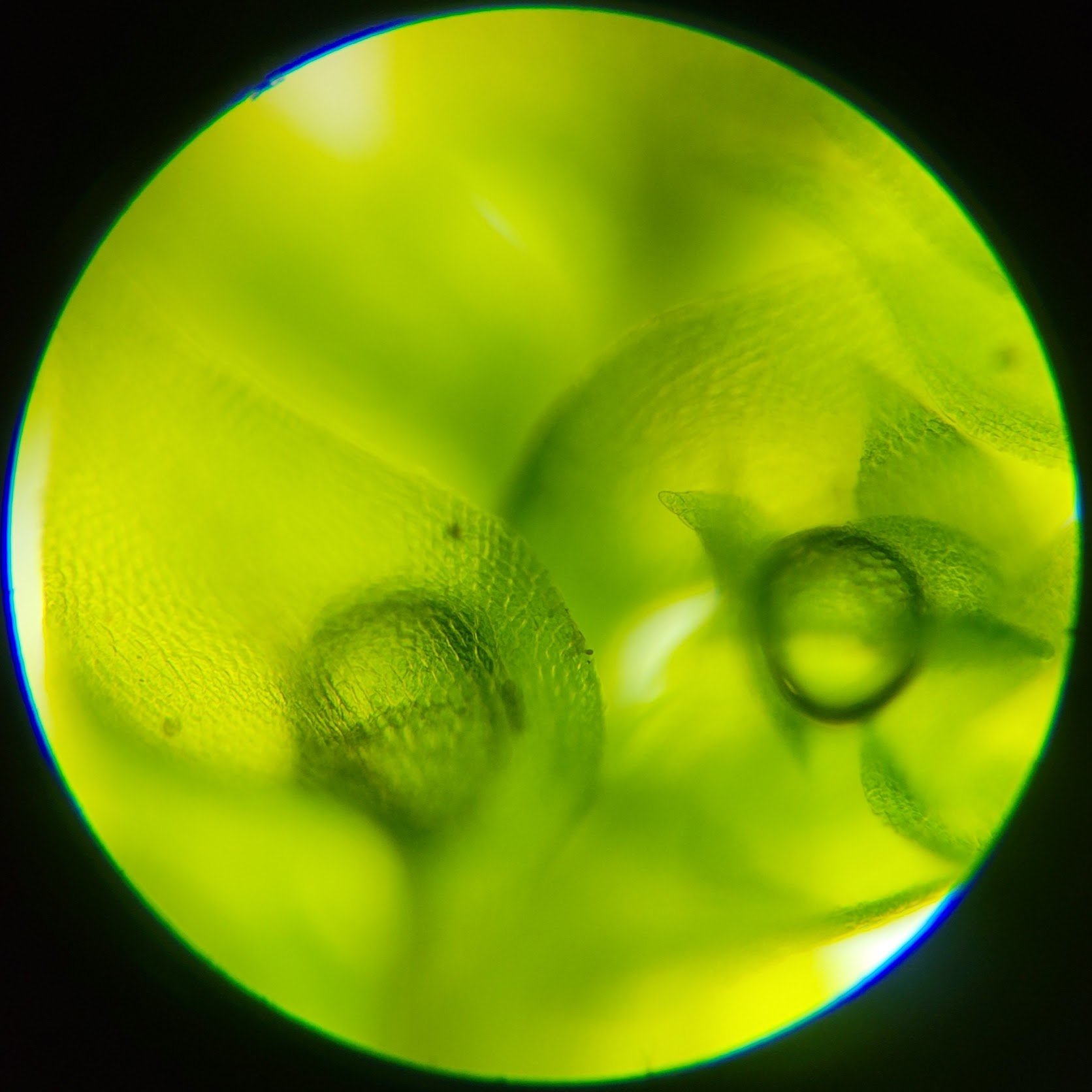
THROUGH THE MICROSCOPE (1/3)
A closer look into miniature worlds
There is an invisible world awaiting our attention: the world of the very small.
In this course, we will take a closer look at everyday objects through microscopes and macro lenses to bear witness to a surprisingly structured world only non-humans can ordinarily see. We will explore the anatomy of plants, the mouths they breathe through (stomata), and the architecture they construct for pollinators. We will look at humanmade objects and notice how color, texture, and the felt sense of our surroundings change with scale. We will view the rich ecosystem of a drop of pond water and see life forms ranging from the monstrous to the surprisingly cute.
Our discussions and reflections will take us through the aesthetics of Kobayashi Issa, Voltaire’s science fiction, the relational ecology of Robin Wall Kimmerer, the investigative wonder of Annie Dillard, and more.
By the end of this seminar, our attention to detail in the marginal and mundane will expand and widen the possibilities of our vision. We will leave with the ability to shift the scale of our attention and deepen our capacity to notice (and enter) these ever-present infinitesimal worlds.
Led by Renee Bell, assistant professor of mathematics at Lehman College.
Wednesdays, 6:30-9:00pm
October 7-21
Our courses cost $250, with a Supporter rate for students with an income above 100k. We also offer a Supported rate for students with constraining circumstances.
Please see our Refund Policy HERE.
Additionally, we offer three tuition-waiver scholarships per course. To apply for a scholarship, click HERE.
ATTENTION ACTIVISM 101 [ONLINE] (Session 2/3)
Attention is the touchstone problem of our age. Over the last twenty years, an unprecedented concentration of technical and financial power has successfully monetized human attention. The harms of this new system — in effect, the "fracking" of our most intimate selves — are familiar to all. Less widely understood is the nature of the movement that has emerged to fight back against this historic injustice: ATTENTION ACTIVISM.
In this course, we will survey the intellectual and practical foundations of the nascent ATTENTION ACTIVISM movement. We'll draw on texts by Karl Marx, Guy Debord, Shoshana Zuboff, Tim Wu, and Yves Citton among others. What do the extractive incursions of the Attention Economy mean for shared life in the twenty-first century — and how are communities of activists already working to resist them?
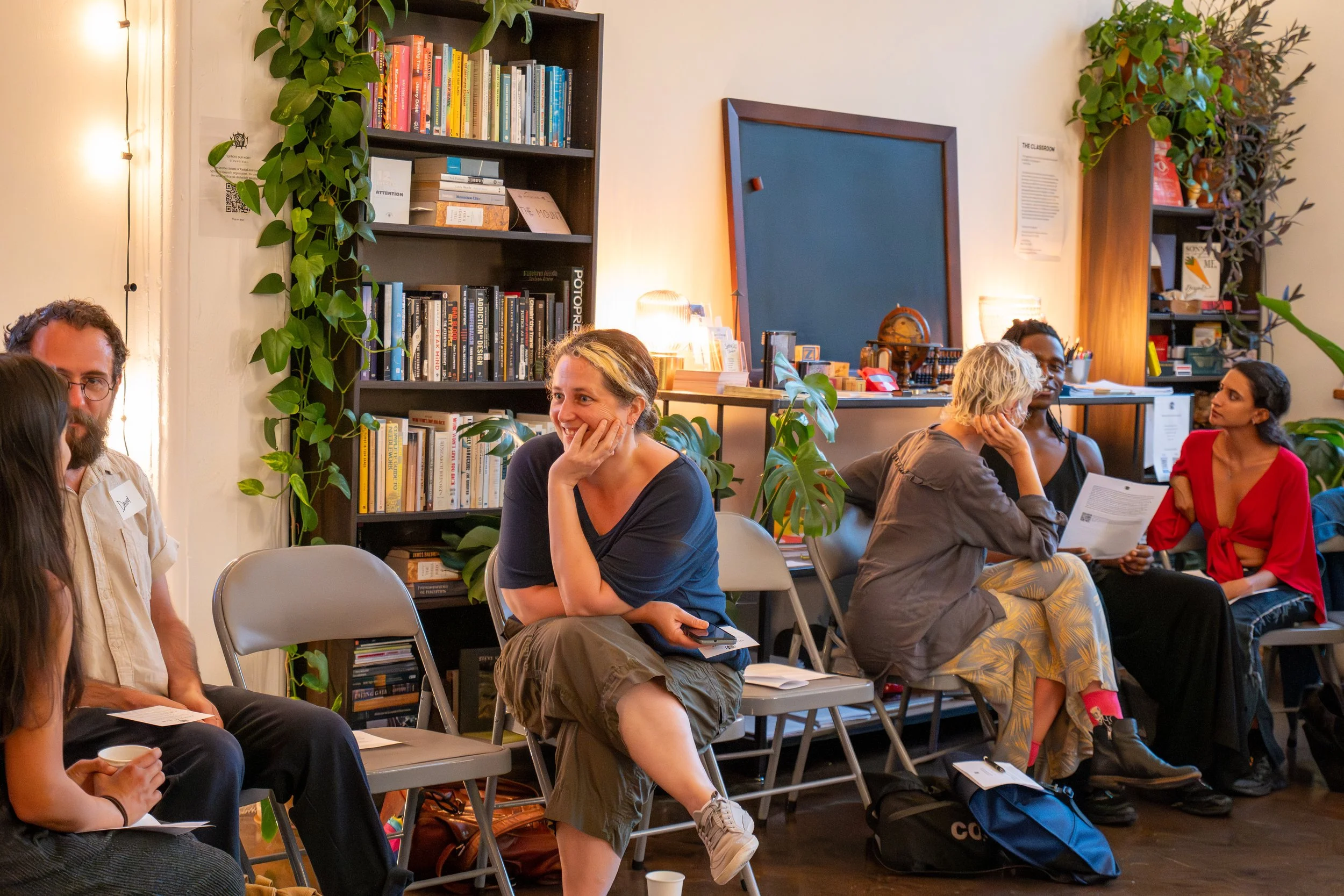
Attention Lab: WORLDBUILDING
Attention Lab workshops are collective participatory experiments in the powers of human attention. Through group practices and guided discussions, we seek to understand what attention is, what it can do, and why it's worth protecting.
We're living through a crisis of imagination: We need new visions for the future that we want to move towards (rather than the dystopias we want to avoid). In this Lab, we'll investigate the worldbuilding powers of human attention.
Book talk & Attention Lab in Columbus, Mississippi
SoRA is heading to Columbus, Mississippi!
On Monday, October 12, we’re excited to join Friendly City Books for an afternoon of conversation and practice. From 1:00pm -3:30pm, we’ll gather for a book talk and Attention Lab, exploring the ideas and practices at the heart of Attensity!. Everyone who joins us will receive a free copy of Attensity!. See you there.
RSVP required — spots are limited
Email info@friendlycitybooks.com to reserve your spot.
PUNK CODING (3/3)
On using the attention frackers’ tools against them
For thirty years, customizing your interface to the internet meant knowing how to write code, and the people who designed the UX and algorithms that define social media feeds had the only vote that counted. Now, through "vibe coding," someone with no engineering background can put a working tool into the world in an afternoon. What opportunities does this shift present? Is the early-web dream of “fixing the internet” now feasible? How wary should we be of these tools, seeing as they are constructed by the attention frackers themselves?
We will read across the media thinkers who saw this coming, from Marshall McLuhan and Neil Postman through Zeynep Tufekci, and we take up Jaron Lanier's argument for data dignity alongside the current case for federated social media and middleware.
We will also build. As a group, we’ll construct wrappers around the most exploitative platforms we use: interfaces that replace the algorithmic Skinner box of platforms like Instagram, TikTok, or YouTube with something that empowers us with more intentional choice. As we do so, we will critically examine the quandary of using the master’s tools on the master’s house. Culture jamming has always worked on borrowed infrastructure, and the infrastructure has never been this borrowable (though we might break some terms of service)!
No coding experience required. That is the whole point.
Led by Brian Rosen, longtime Pixar technologist and now a research scientist at Google X, The Moonshot Factory.
Our courses cost $250, with a Supporter rate for students with an income above 100k. We also offer a Supported rate for students with constraining circumstances.
Please see our Refund Policy HERE.
Additionally, we offer three tuition-waiver scholarships per course. To apply for a scholarship, click HERE.
Photo by Andre Moura
ATTENTION ACTIVISM 201 [ONLINE] (Session 3/3)
ATTENTION ACTIVISM is the collective movement to push back against the commodification of human attention — what we call "human fracking" — and create, space by community space, a world where we can flourish. In this training, we will explore practical strategies for ATTENTION ACTIVISM, drawing on texts by bell hooks, Paulo Freire, and Deva Woodly. In the 201 training, we will focus on developing the organizing, facilitation, and movement-building skills required to build groups for ATTENTION ACTIVISM. The bulk of the course will be dedicated to supporting participants toward an organizing project in their own communities.
Completion of our Attention Activism 101 seminar is required for participation in our 201 training. Participants who complete Attention Activism 201 will be eligible for inclusion in our national organizing coalition.
Wednesdays, 7-8:45pm EST
December 3, 10, and 17
On Zoom
THROUGH THE MICROSCOPE (2/3)
A closer look into miniature worlds
There is an invisible world awaiting our attention: the world of the very small.
In this course, we will take a closer look at everyday objects through microscopes and macro lenses to bear witness to a surprisingly structured world only non-humans can ordinarily see. We will explore the anatomy of plants, the mouths they breathe through (stomata), and the architecture they construct for pollinators. We will look at humanmade objects and notice how color, texture, and the felt sense of our surroundings change with scale. We will view the rich ecosystem of a drop of pond water and see life forms ranging from the monstrous to the surprisingly cute.
Our discussions and reflections will take us through the aesthetics of Kobayashi Issa, Voltaire’s science fiction, the relational ecology of Robin Wall Kimmerer, the investigative wonder of Annie Dillard, and more.
By the end of this seminar, our attention to detail in the marginal and mundane will expand and widen the possibilities of our vision. We will leave with the ability to shift the scale of our attention and deepen our capacity to notice (and enter) these ever-present infinitesimal worlds.
Led by Renee Bell, assistant professor of mathematics at Lehman College.
Wednesdays, 6:30-9:00pm
October 7-21
Our courses cost $250, with a Supporter rate for students with an income above 100k. We also offer a Supported rate for students with constraining circumstances.
Please see our Refund Policy HERE.
Additionally, we offer three tuition-waiver scholarships per course. To apply for a scholarship, click HERE.
ATTENTION ACTIVISM 101 [ONLINE] (Session 3/3)
Attention is the touchstone problem of our age. Over the last twenty years, an unprecedented concentration of technical and financial power has successfully monetized human attention. The harms of this new system — in effect, the "fracking" of our most intimate selves — are familiar to all. Less widely understood is the nature of the movement that has emerged to fight back against this historic injustice: ATTENTION ACTIVISM.
In this course, we will survey the intellectual and practical foundations of the nascent ATTENTION ACTIVISM movement. We'll draw on texts by Karl Marx, Guy Debord, Shoshana Zuboff, Tim Wu, and Yves Citton among others. What do the extractive incursions of the Attention Economy mean for shared life in the twenty-first century — and how are communities of activists already working to resist them?
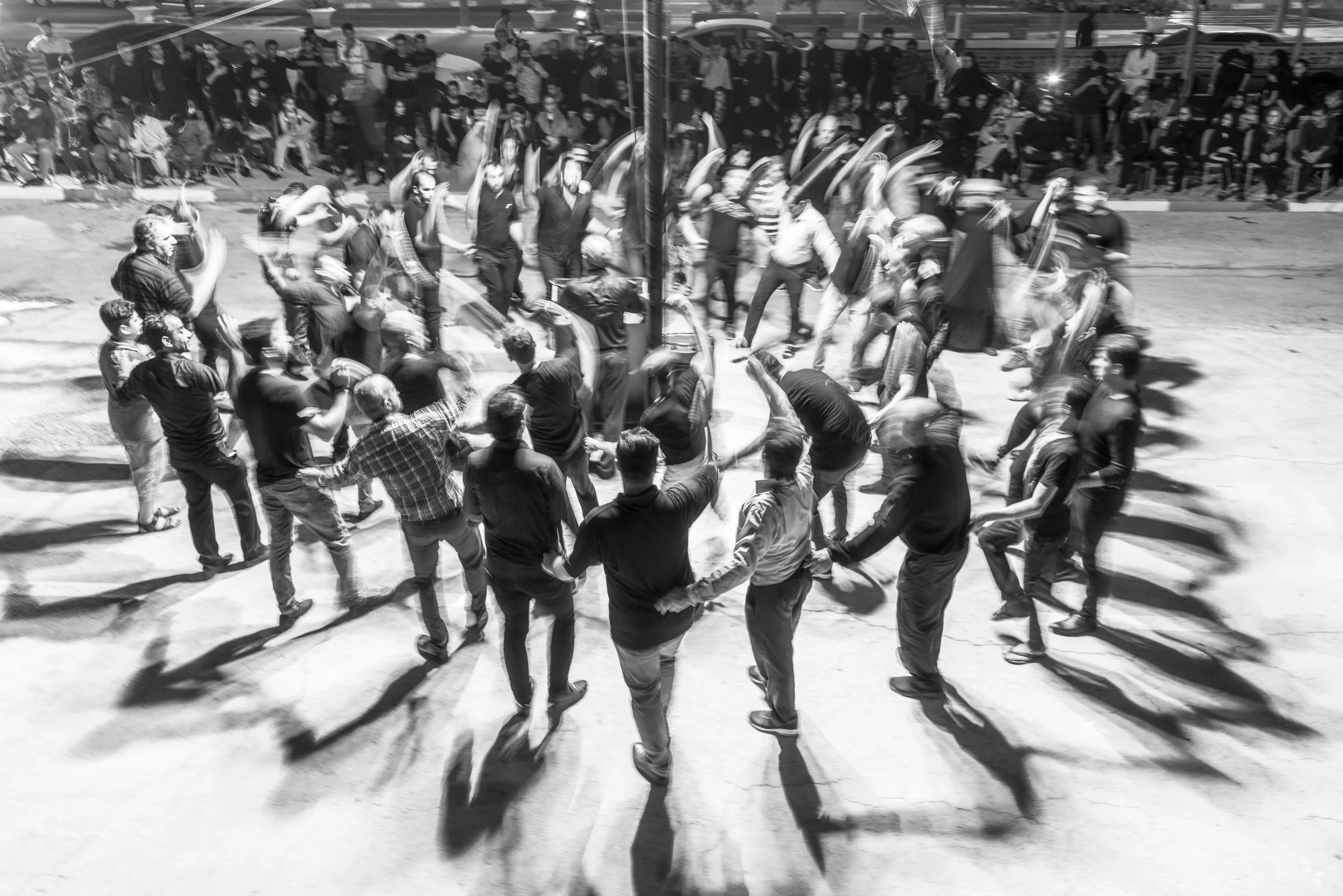
FLASH MOBS! (1/3)
On the spatial politics of the flash mob
From novel, to viral, to commercial, to cringe: the life cycle of the flash mob, an internet trend that got people off the internet to gather in physical space. Now, fifteen years past its cultural peak, we have enough distance to study the flash mob as a social phenomenon, organizing practice, and art form.
What can we understand about culture, virality, and public performance by tracking the history and transformation of the flash mob? From the proliferation of interventionist public performance art in the 20th century to the internet’s creation of “smart mobs” to the specific conditions of virality in the mid 2010s and its relationship to commercialism, we will begin to see flash mobs as an action with real cultural and social organizing potential.
We will also study the formal ingredients of the flash mob — instantaneous and often joyful synchronized behaviors performed briefly in a public space — and the way this mode of shared experience has been shaped by advances in technology. Together, we will think through the liberatory and resistance-oriented cultural potential that may be discovered in this form. Is it possible to reclaim this "viral" mode of gathering for something greater than likes and reshares?
Led by interdisciplinary theatre artist and educator Sheridan Merrick.
Thursdays, 6:30-9:00pm
October 15-29
Our courses cost $250, with a Supporter rate for students with an income above 100k. We also offer a Supported rate for students with constraining circumstances.
Please see our Refund Policy HERE.
Additionally, we offer three tuition-waiver scholarships per course. To apply for a scholarship, click HERE.
Photo by Morteza Akhnia
THROUGH THE MICROSCOPE (3/3)
A closer look into miniature worlds
There is an invisible world awaiting our attention: the world of the very small.
In this course, we will take a closer look at everyday objects through microscopes and macro lenses to bear witness to a surprisingly structured world only non-humans can ordinarily see. We will explore the anatomy of plants, the mouths they breathe through (stomata), and the architecture they construct for pollinators. We will look at humanmade objects and notice how color, texture, and the felt sense of our surroundings change with scale. We will view the rich ecosystem of a drop of pond water and see life forms ranging from the monstrous to the surprisingly cute.
Our discussions and reflections will take us through the aesthetics of Kobayashi Issa, Voltaire’s science fiction, the relational ecology of Robin Wall Kimmerer, the investigative wonder of Annie Dillard, and more.
By the end of this seminar, our attention to detail in the marginal and mundane will expand and widen the possibilities of our vision. We will leave with the ability to shift the scale of our attention and deepen our capacity to notice (and enter) these ever-present infinitesimal worlds.
Led by Renee Bell, assistant professor of mathematics at Lehman College.
Wednesdays, 6:30-9:00pm
October 7-21
Our courses cost $250, with a Supporter rate for students with an income above 100k. We also offer a Supported rate for students with constraining circumstances.
Please see our Refund Policy HERE.
Additionally, we offer three tuition-waiver scholarships per course. To apply for a scholarship, click HERE.
FLASH MOBS! (2/3)
On the spatial politics of the flash mob
From novel, to viral, to commercial, to cringe: the life cycle of the flash mob, an internet trend that got people off the internet to gather in physical space. Now, fifteen years past its cultural peak, we have enough distance to study the flash mob as a social phenomenon, organizing practice, and art form.
What can we understand about culture, virality, and public performance by tracking the history and transformation of the flash mob? From the proliferation of interventionist public performance art in the 20th century to the internet’s creation of “smart mobs” to the specific conditions of virality in the mid 2010s and its relationship to commercialism, we will begin to see flash mobs as an action with real cultural and social organizing potential.
We will also study the formal ingredients of the flash mob — instantaneous and often joyful synchronized behaviors performed briefly in a public space — and the way this mode of shared experience has been shaped by advances in technology. Together, we will think through the liberatory and resistance-oriented cultural potential that may be discovered in this form. Is it possible to reclaim this "viral" mode of gathering for something greater than likes and reshares?
Led by interdisciplinary theatre artist and educator Sheridan Merrick.
Thursdays, 6:30-9:00pm
October 15-29
Our courses cost $250, with a Supporter rate for students with an income above 100k. We also offer a Supported rate for students with constraining circumstances.
Please see our Refund Policy HERE.
Additionally, we offer three tuition-waiver scholarships per course. To apply for a scholarship, click HERE.
Photo by Morteza Akhnia
FLASH MOBS! (3/3)
On the spatial politics of the flash mob
From novel, to viral, to commercial, to cringe: the life cycle of the flash mob, an internet trend that got people off the internet to gather in physical space. Now, fifteen years past its cultural peak, we have enough distance to study the flash mob as a social phenomenon, organizing practice, and art form.
What can we understand about culture, virality, and public performance by tracking the history and transformation of the flash mob? From the proliferation of interventionist public performance art in the 20th century to the internet’s creation of “smart mobs” to the specific conditions of virality in the mid 2010s and its relationship to commercialism, we will begin to see flash mobs as an action with real cultural and social organizing potential.
We will also study the formal ingredients of the flash mob — instantaneous and often joyful synchronized behaviors performed briefly in a public space — and the way this mode of shared experience has been shaped by advances in technology. Together, we will think through the liberatory and resistance-oriented cultural potential that may be discovered in this form. Is it possible to reclaim this "viral" mode of gathering for something greater than likes and reshares?
Led by interdisciplinary theatre artist and educator Sheridan Merrick.
Thursdays, 6:30-9:00pm
October 15-29
Our courses cost $250, with a Supporter rate for students with an income above 100k. We also offer a Supported rate for students with constraining circumstances.
Please see our Refund Policy HERE.
Additionally, we offer three tuition-waiver scholarships per course. To apply for a scholarship, click HERE.
Photo by Morteza Akhnia
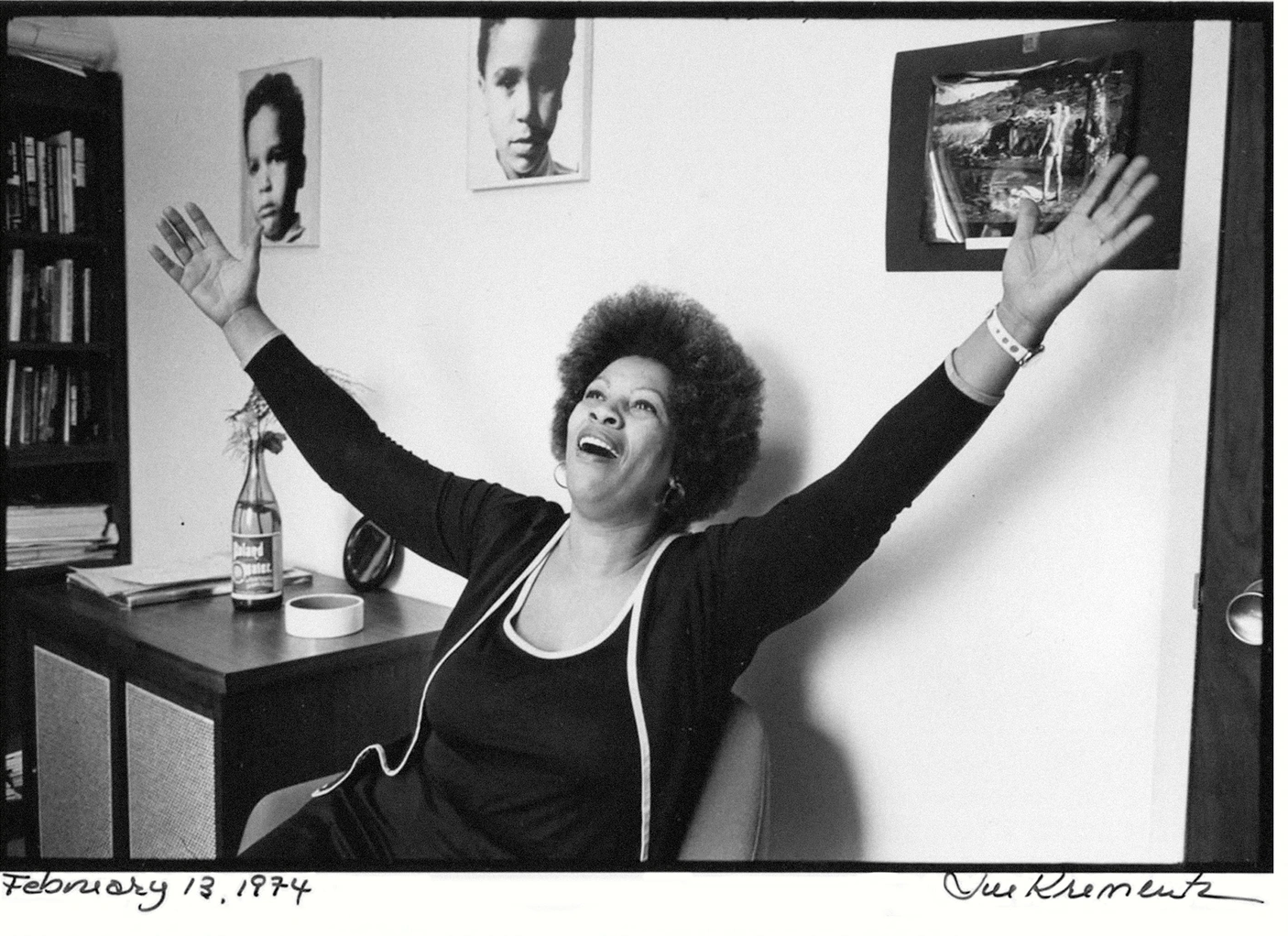
The Dance of an Open Mind: Toni Morrison's Radical Attentions with Prof. Namwali Serpell
RSVP HERE!
Toni Morrison's contributions to literature and American culture are a case study in the powers of human attention: to the possibilities of language, to the complexity of love, and to the pain and beauty of our American inheritance. In this evening of close reading and discussion, we'll take a close look at one of Morrison's essays with novelist, critic, and scholar Prof. Namwali Serpell, author of On Morrison (Hogarth 2026). The close reading will be followed by a Q&A with Prof. Serpell on Morrison's work as a whole.
Namwali Serpell is a writer and a Professor of English at Harvard. She’s the author of three works of criticism, Seven Modes of Uncertainty (2014), Stranger Faces (2020), and On Morrison (2026), and two novels: The Old Drift (2019) and The Furrows (2022). She was born in Lusaka and she lives in New York City.
PASSAGES: On Morrison podcast.
Photo credit: Toni Morrison in her office at Random House (Jill Krementz)
Photo credit: Toni Morrison in her office at Random House (Jill Krementz)
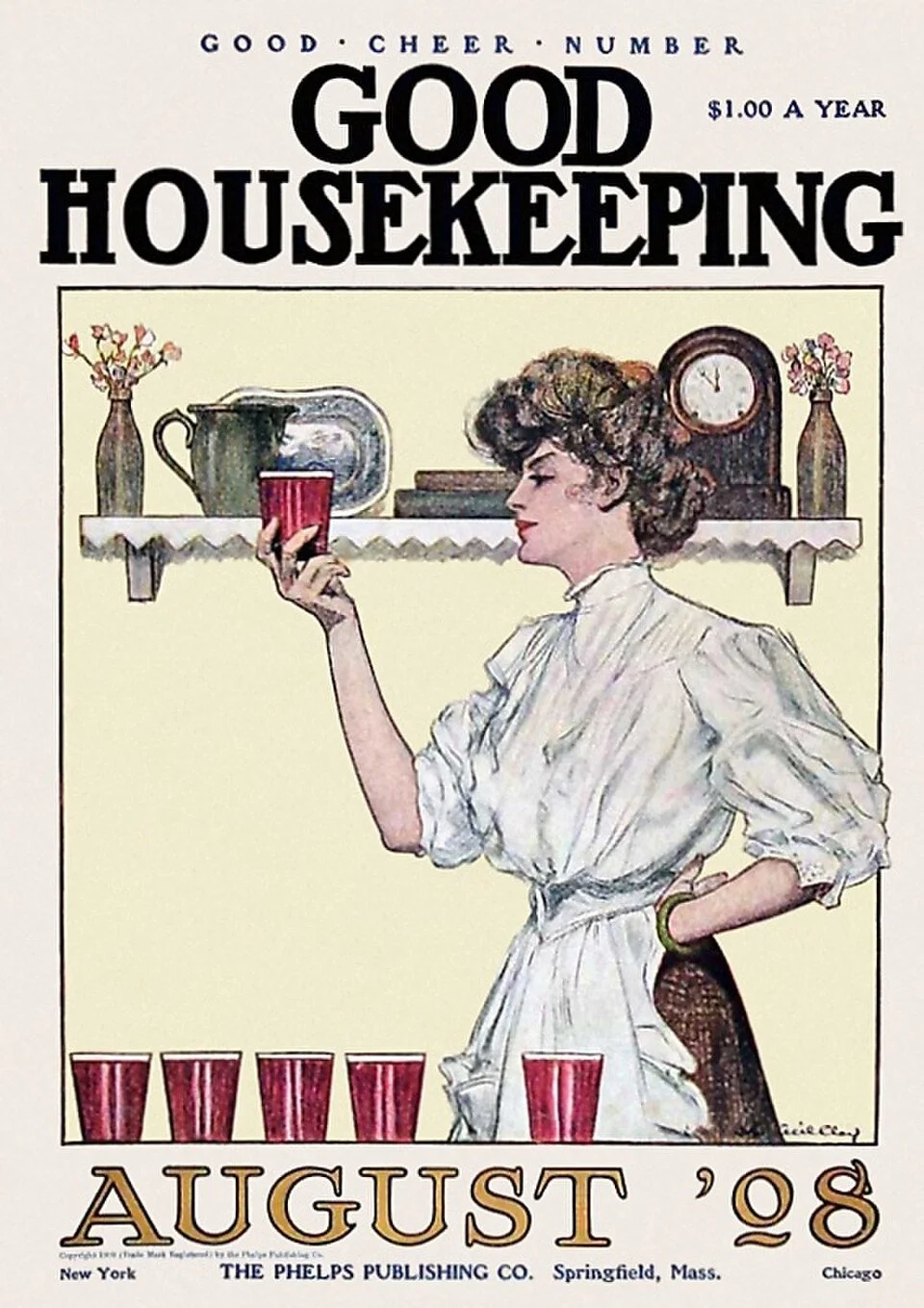
HOUSEWORK as WORLD-BUILDING (1/3)
On the reenchantment of invisible labor
Cook, clean, comfort, teach, repeat. Social reproduction is the engine of collective life and housework its most intimate geography. What we don’t attend to turns invisible, and both the labor of housework and those who perform it are frequent victims of this invisibility. In this course we will attend closely to often-marginalized domestic labor. We will do so from three distinct sociocultural vantage points: housework as world-building, as art practice, and as ritual.
Our time together will take us through the International Wages for Housework movement of the 1970s, thinkers on the politics of care such as M.E. O’Brien and Mai’a Williams, the art practices of Mierle Laderman Ukeles and Mona Hatoum, and the contemplative work of Thich Nhat Hanh. Through discussion, attention practices, collaborative writing, and experimental performance art, we will explore historical and contemporary interventions into housework and investigate what rigorous attention might alchemize our daily labor into.
Students should come ready to examine the role of housework in their own lives with generous curiosity. Dirty dishes optional.
Led by feminist writer, researcher, and organizer Zafi Tate.
Wednesdays, 6:30-9:00pm
November 4-18
Our courses cost $250, with a Supporter rate for students with an income above 100k. We also offer a Supported rate for students with constraining circumstances.
Please see our Refund Policy HERE.
Additionally, we offer three tuition-waiver scholarships per course. To apply for a scholarship, click HERE.
HOUSEWORK as WORLD-BUILDING (2/3)
On the reenchantment of invisible labor
Cook, clean, comfort, teach, repeat. Social reproduction is the engine of collective life and housework its most intimate geography. What we don’t attend to turns invisible, and both the labor of housework and those who perform it are frequent victims of this invisibility. In this course we will attend closely to often-marginalized domestic labor. We will do so from three distinct sociocultural vantage points: housework as world-building, as art practice, and as ritual.
Our time together will take us through the International Wages for Housework movement of the 1970s, thinkers on the politics of care such as M.E. O’Brien and Mai’a Williams, the art practices of Mierle Laderman Ukeles and Mona Hatoum, and the contemplative work of Thich Nhat Hanh. Through discussion, attention practices, collaborative writing, and experimental performance art, we will explore historical and contemporary interventions into housework and investigate what rigorous attention might alchemize our daily labor into.
Students should come ready to examine the role of housework in their own lives with generous curiosity. Dirty dishes optional.
Led by feminist writer, researcher, and organizer Zafi Tate.
Wednesdays, 6:30-9:00pm
November 4-18
Our courses cost $250, with a Supporter rate for students with an income above 100k. We also offer a Supported rate for students with constraining circumstances.
Please see our Refund Policy HERE.
Additionally, we offer three tuition-waiver scholarships per course. To apply for a scholarship, click HERE.
HOUSEWORK as WORLD-BUILDING (3/3)
On the reenchantment of invisible labor
Cook, clean, comfort, teach, repeat. Social reproduction is the engine of collective life and housework its most intimate geography. What we don’t attend to turns invisible, and both the labor of housework and those who perform it are frequent victims of this invisibility. In this course we will attend closely to often-marginalized domestic labor. We will do so from three distinct sociocultural vantage points: housework as world-building, as art practice, and as ritual.
Our time together will take us through the International Wages for Housework movement of the 1970s, thinkers on the politics of care such as M.E. O’Brien and Mai’a Williams, the art practices of Mierle Laderman Ukeles and Mona Hatoum, and the contemplative work of Thich Nhat Hanh. Through discussion, attention practices, collaborative writing, and experimental performance art, we will explore historical and contemporary interventions into housework and investigate what rigorous attention might alchemize our daily labor into.
Students should come ready to examine the role of housework in their own lives with generous curiosity. Dirty dishes optional.
Led by feminist writer, researcher, and organizer Zafi Tate.
Wednesdays, 6:30-9:00pm
November 4-18
Our courses cost $250, with a Supporter rate for students with an income above 100k. We also offer a Supported rate for students with constraining circumstances.
Please see our Refund Policy HERE.
Additionally, we offer three tuition-waiver scholarships per course. To apply for a scholarship, click HERE.
![ATTENTION ACTIVISM 101 [IN PERSON] (1/3)](https://images.squarespace-cdn.com/content/v1/647e2e2c944dab371f654149/c20d28cb-1e12-4d82-8b75-79e5e97b83fb/Untitled%252Bdesign.png)
ATTENTION ACTIVISM 101 [IN PERSON] (1/3)
Our flagship course on the attention crisis and collective action
Attention is the touchstone problem of our age. Over the last twenty years, an unprecedented concentration of technical and financial power has successfully monetized human attention. The harms of this new system — in effect, the "fracking" of our most intimate selves — are familiar to all. Less widely understood is the nature of the movement that has emerged to fight back against this historic injustice: ATTENTION ACTIVISM.
In this course, we will survey the intellectual and practical foundations of the nascent ATTENTION ACTIVISM movement. We'll draw on texts by Anna Tsing, Natasha Dow Schull, Shoshanna Zuboff, Tim Wu, and Jonathan Crary, among others. What do the extractive incursions of the Attention Economy mean for shared life in the twenty-first century — and how are communities of activists already working to resist them?
Please note: this is an IN-PERSON section of our course.
Mondays, 6:30-8:15pm
November 30th-December 14th
Please see our Refund Policy HERE.
Additionally, we offer three tuition-waiver scholarships per course. To apply for a scholarship, click HERE.
Image credit: Pewter Chalice (1935–1942) by James H.C. Vail. Original from The National Galley of Art.
ATTENTION ACTIVISM 101 [IN PERSON] (2/3)
Our flagship course on the attention crisis and collective action
Attention is the touchstone problem of our age. Over the last twenty years, an unprecedented concentration of technical and financial power has successfully monetized human attention. The harms of this new system — in effect, the "fracking" of our most intimate selves — are familiar to all. Less widely understood is the nature of the movement that has emerged to fight back against this historic injustice: ATTENTION ACTIVISM.
In this course, we will survey the intellectual and practical foundations of the nascent ATTENTION ACTIVISM movement. We'll draw on texts by Anna Tsing, Natasha Dow Schull, Shoshanna Zuboff, Tim Wu, and Jonathan Crary, among others. What do the extractive incursions of the Attention Economy mean for shared life in the twenty-first century — and how are communities of activists already working to resist them?
Please note: this is an IN-PERSON section of our course.
Mondays, 6:30-8:15pm
November 30th-December 14th
Please see our Refund Policy HERE.
Additionally, we offer three tuition-waiver scholarships per course. To apply for a scholarship, click HERE.
Image credit: Pewter Chalice (1935–1942) by James H.C. Vail. Original from The National Galley of Art.
ATTENTION ACTIVISM 101 [IN PERSON] (3/3)
Our flagship course on the attention crisis and collective action
Attention is the touchstone problem of our age. Over the last twenty years, an unprecedented concentration of technical and financial power has successfully monetized human attention. The harms of this new system — in effect, the "fracking" of our most intimate selves — are familiar to all. Less widely understood is the nature of the movement that has emerged to fight back against this historic injustice: ATTENTION ACTIVISM.
In this course, we will survey the intellectual and practical foundations of the nascent ATTENTION ACTIVISM movement. We'll draw on texts by Anna Tsing, Natasha Dow Schull, Shoshanna Zuboff, Tim Wu, and Jonathan Crary, among others. What do the extractive incursions of the Attention Economy mean for shared life in the twenty-first century — and how are communities of activists already working to resist them?
Please note: this is an IN-PERSON section of our course.
Mondays, 6:30-8:15pm
November 30th-December 14th
Please see our Refund Policy HERE.
Additionally, we offer three tuition-waiver scholarships per course. To apply for a scholarship, click HERE.
Image credit: Pewter Chalice (1935–1942) by James H.C. Vail. Original from The National Galley of Art.

Sidewalk Study CLEVELAND, OH: Social Currency
We move through the world dressed — every day, without much thought, we make dozens of small decisions about how visible we want to be. What to wear on top, what to leave off, what to match and what to let clash. Most of these choices happen so automatically we don't register them as choices at all.
Georg Simmel, writing in 1904, noticed something quietly radical about this: clothing isn't just self-expression. It's a way of managing attention itself — how much of it we want, how much we can bear, and where the line falls between disappearing into a crowd and standing apart from it. He wrote that following convention makes us invisible — "its acceptance by any one individual does not call attention to him" — while even a small departure from it is "immediately noticed." Attention, in other words, isn't something that just happens to us. We're constantly, quietly negotiating for it, or negotiating our way out of it
Text: FASHION, Georg Simmel 1904
Date: Sunday, September 27 at 2pm
Location: Ames Family Atrium at the Cleveland Museum of Art with Aditi & Rob
If you are interested in joining the Cleveland, OH mailing list, fill out this form.

Sidewalk Study AUSTIN, TX: EYE FOR STYLE
Long before Bill Cunningham became famous for photographing street style in New York, he was already an obsessive student of how people dress. A milliner, collector, and lifelong observer, Cunningham delighted in the unexpected combinations, small details, and personal inventions through which people made fashion their own.
Taking inspiration from Cunningham’s joyful and idiosyncratic way of seeing, we’ll turn the Guadalupe Vintage Market into a field of observation. Among its racks, objects, and outfits, we’ll practice noticing what makes something stylish, surprising, peculiar, beautiful, or entirely its own. Perhaps personal style begins not with knowing what to wear, but with learning how to look.
Text: Bill Cunningham’s Fashion Climbing: A Memoir with Photographs
Date: Sunday, September 27, 2026
Location: Guadalupe Vintage Market, Austin
If you are interested in joining the Austin, TX mailing list, fill out this form.

Sidewalk Study WASHINGTON, DC: FITFUL TRACINGS
Text: Jia Tolentino’s Trick Mirror
Date: Sunday, September 27
Location: CityCenter, DC
If you are interested in joining the Washington DC mailing list, fill out this form.
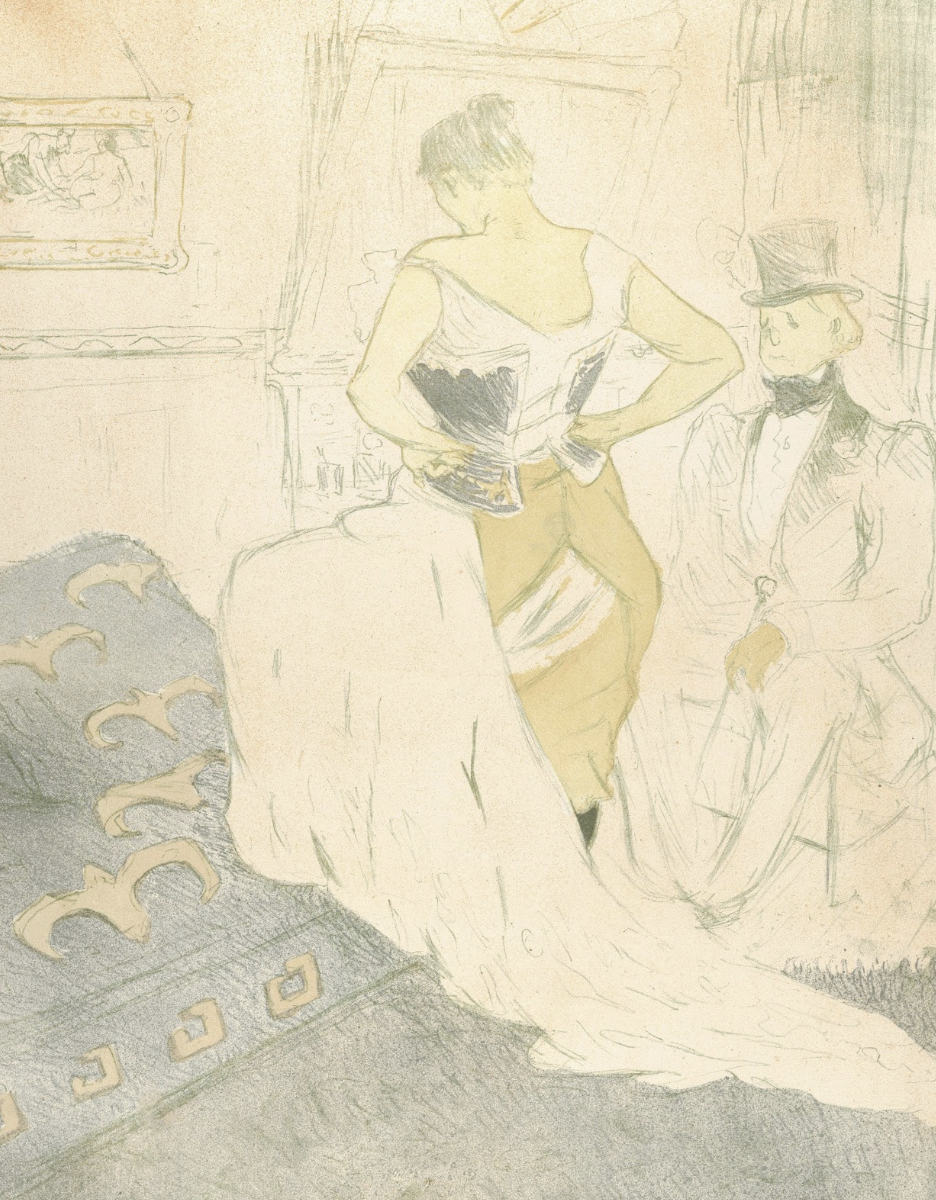
Sidewalk Study: OH, TO BE CLOTHED!
We take for granted the practice of clothing our bodies, and most attempts to theorize this practice emerge from social science, psychology, or marketing research. But what if those shoes want to be on your feet as much as you want to wear them? What if our clothing “choices” convey less a decision that is made by us, and rather a relationship that unfolds between us and our garments?
Looking through the lens of Affect Studies (or "non-representational theory”), this Study will consider how identity is affected (!) when we include clothing in the “assemblage” of our bodies.
Text: By Lucia Ruggerone’s The Feeling of Being Dressed: Affect Studies and the Clothed Body
Date: Saturday, September 26, 2026
Location: Chelsea with Miranda & Eleanor

Sidewalk Study ST. LOUIS, MO: “A FAVOURITE DRESS”
Mrs. Dalloway’s poignant reflection on middle age, interior worlds, and mental health has had staying power for more than a century. We follow a single day in the life of Clarissa Dalloway as she prepares for a party and reflects on the choices she’s made . . . and the ones she’s let drift too far from her.
Choosing to mend “a favourite dress” to wear to the party becomes an act of reflection and care but one that’s also marked by distraction and insecurity. What can be fixed and who can fix it? What is better left unmended and unexamined?
Text: Virginia Woolf’s Mrs. Dalloway (1925)
Date: Thursday, September 24 at 6:30pm Central
Location: South City with Chris and Michelle
If you are interested in joining the St. Louis, MO mailing list, fill out this form.
SEEING, DRAWING, UNSEEING (2/3)
On figure drawing as a mode of attention
Drawing isn't simply a language of representation; it's also a way of paying attention.
Through sustained observation and a series of practical exercises, we will explore how drawing can interrupt familiar ways of seeing and make room for a slower, more attentive, and more intuitive engagement with the world. Drawing allows us to look before we judge or interpret.
The course will focus especially on figure drawing and its complex relationship with the body, with particular attention to the female body. The history of visual representation is also a history of power: who is allowed to look, who becomes the object of the gaze, and how bodies are made visible—or reduced to objects. By examining the act of looking itself, we will consider whether drawing can help us question some of these inherited habits and develop a different relationship with the body.
The seminar combines practical exercises with critical reflection. Its aim is not simply to produce a successful image, but to use drawing as a way of asking how we see, what we have been taught to see, and how we might begin to see differently.
Led by architect and educator Olímpia Solà Inaraja.
Wednesdays, 6:30-9:00pm
September 16-30
Our courses cost $250, with a Supporter rate for students with an income above 100k. We also offer a Supported rate for students with constraining circumstances.
Please see our Refund Policy HERE.
Additionally, we offer three tuition-waiver scholarships per course. To apply for a scholarship, click HERE.
Image credit: Study of Angel's Hand for "Mercy's Dream" (1857) by Daniel Huntington. Original from The Smithsonian.

Sidewalk Study: The COOL
The concept of ‘cool’ is foundational to contemporary fashion and one of America’s great cultural signifiers. Coolness also, according to the scholar Robert Farris Thompson, arrived in America from related concepts in many cultures across West Africa and the African diaspora. What kinds of decisions do people make to seek out this ever-elusive ideal? What exactly does coolness communicate? Where does the concept even come from?
In this study we’ll examine how taking an Afro-diasporic view of coolness can help us understand how cool people present themselves, why so many people want to be cool, and how coolness can be understood as “a symbolically generous aesthetic organization of social reality”.
Text: Robert Farris Thompson’s “An Introduction to Transatlantic Black Art History”
Date: Saturday, September 26 @ 2pm
Location: Chelsea with Nicholas & Connor
RADICAL TRASH STUDIES (1/3)
On the social construction of trash
If you place attention on something, does it stop being trash? Is there waste only where there's no attention?
This seminar takes that question and gets our hands dirty with it. Drawing on geographer Vinay Gidwani's work on India's "waste-value dialectic," alongside artist Mierle Laderman Ukeles's Maintenance Artist and its insistence that unseen labor deserves witness, we'll build our own practice of sustained, unglamorous noticing. Students will keep a waste log, transform a piece of their own discarded material by hand into dye, into stock, and into structure. We'll close the course with a group exhibition built entirely from what got reclaimed.
The seminar also draws on fieldwork from Bangalore's construction-waste economy (Baka, Doherty, Butt) and returns often to Dante, whose Inferno remains one of literature's oldest arguments that waste is a location, not a substance. We will ask: is there really an “away” to throw things to? By the end, we will have a richer, more flexible and personal relationship to what we discard.
Led by Shivani Lakshmi Aysola, founding principal of Shamba-la Studios and author of Dialectics of Debris, a study of Bangalore's construction waste landscape.
Tuesdays, 6:30-9:00pm
September 22-October 6
Our courses cost $250, with a Supporter rate for students with an income above 100k. We also offer a Supported rate for students with constraining circumstances.
Please see our Refund Policy HERE.
Additionally, we offer three tuition-waiver scholarships per course. To apply for a scholarship, click HERE.
Photo by Kai Pro
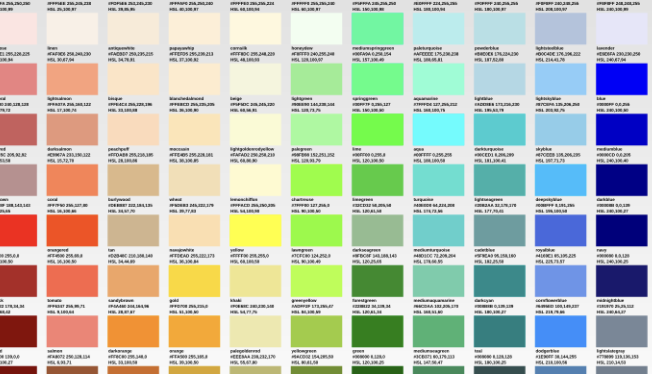
Sidewalk Study SILICON VALLEY, CA : The Secret Life of Color
Where does color come from? In her 2016 book The Secret Lives of Color, Kassia St. Clair deepens our understanding of color by delving into the histories of dozens of pigments and dyes. Through her detailed research, St. Clair reminds us not to take color for granted, revealing the surprisingly arduous means by which colors– such as Ultramarine blue and Tyrian Purple– were originally sourced, and how these hues come to hold meaning. We’ll be following St. Clair’s lead as we consider through the lens of science, myth, and history in downtown Menlo Park.
Text: The Secret Lives of Color Kassia St. Clair
Date: September 22nd, 6 PM-8 PM
Location: Fremont Park, Menlo Park CA
If you are interested in joining the Silicon Valley, CA mailing list, fill out this form.
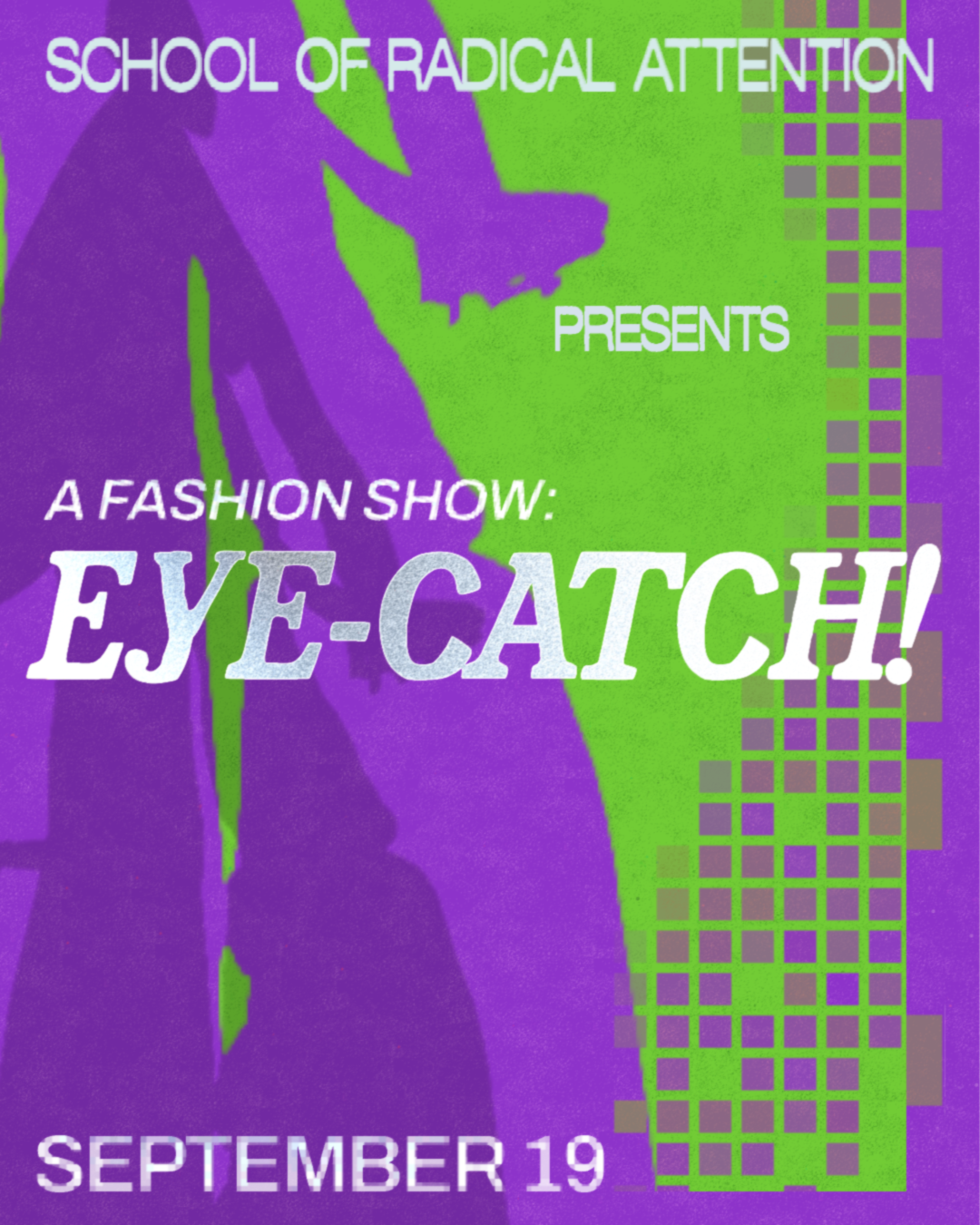
EYE-CATCH! Fashion Show
Please join SoRA our inaugural fashion show featuring wearable pieces by Jianing Zhao, Nathalie San Fratello, Tanner Kok, Lexi Fujita, and Dennis RedMoon Darkeem, winning stylists from the School’s EYE-CATCH! open call. Each stylist will showcase four looks inspired by the aesthetics and counter-aesthetics of the Attention Economy, brought to life by twenty models as our Dumbo Sanctuary transforms into a runway.
In addition to the runway, the fashion show will invite audiences to an attentional score designed in conversation with sartorial traditions, to be activated by audience members during the fashion show. The runway will be followed by an afterparty with light refreshments and DJ set by Simisola. Limited-edition upcycled merch with screen printed designs and a digicam photo zone will be open throughout the evening to enjoy!
Please note that if you arrive after 6:20pm, the doors will close in order to minimize disruption during the runway. If you arrive late, please text us at (646) 526-9412.
The audience area during the runway will be a mixture of seating and standing, assigned on a first-come first-serve basis. If you have accessibility concerns, please feel free to email us at strotherschool@sustainedattention.net and we will accommodate you.

Sidewalk Study CLEVELAND, OH: AGAINST THE SEASON
Fashion moves in seasons. A new collection drops every few weeks, whether we're ready or not. A flax plant keeps its own season, and it won't be rushed for anyone's calendar. This month we follow author Eve Schaub, who cleared out her vegetable garden and planted flax instead, trading a fast-fashion habit for a two-year apprenticeship in scutching, hackling, spinning, weaving, and sewing her own dress from seed to hem. We'll pair her story with the essay that first named this instinct: Kate Fletcher's 2007 call for "slow fashion," which argues that a fiber takes the same amount of time to grow no matter how fast a store shelf turns over — the clock was never really ours to speed up. What would it mean to give a piece of clothing the time it actually takes to make? And what do we lose when we don't?
Texts: Fio Geiran and Janaya Williams' "She Isn't Just Sewing a Dress. She's Growing One" (NPR, August 12, 2026) & Kate Fletcher's "Slow Fashion" (The Ecologist, June 2007)
Date: Saturday, September 19 at 2pm
Location: Edgewater Park with Aditi and Rob
If you are interested in joining the Cleveland, OH mailing list, fill out this form.
ATTENTION ACTIVISM 101 [ONLINE] (Session 3/3)
Attention is the touchstone problem of our age. Over the last twenty years, an unprecedented concentration of technical and financial power has successfully monetized human attention. The harms of this new system — in effect, the "fracking" of our most intimate selves — are familiar to all. Less widely understood is the nature of the movement that has emerged to fight back against this historic injustice: ATTENTION ACTIVISM.
In this course, we will survey the intellectual and practical foundations of the nascent ATTENTION ACTIVISM movement. We'll draw on texts by Karl Marx, Guy Debord, Shoshana Zuboff, Tim Wu, and Yves Citton among others. What do the extractive incursions of the Attention Economy mean for shared life in the twenty-first century — and how are communities of activists already working to resist them?
SEEING, DRAWING, UNSEEING (1/3)
On figure drawing as a mode of attention
Drawing isn't simply a language of representation; it's also a way of paying attention.
Through sustained observation and a series of practical exercises, we will explore how drawing can interrupt familiar ways of seeing and make room for a slower, more attentive, and more intuitive engagement with the world. Drawing allows us to look before we judge or interpret.
The course will focus especially on figure drawing and its complex relationship with the body, with particular attention to the female body. The history of visual representation is also a history of power: who is allowed to look, who becomes the object of the gaze, and how bodies are made visible—or reduced to objects. By examining the act of looking itself, we will consider whether drawing can help us question some of these inherited habits and develop a different relationship with the body.
The seminar combines practical exercises with critical reflection. Its aim is not simply to produce a successful image, but to use drawing as a way of asking how we see, what we have been taught to see, and how we might begin to see differently.
Led by architect and educator Olímpia Solà Inaraja.
Wednesdays, 6:30-9:00pm
September 16-30
Our courses cost $250, with a Supporter rate for students with an income above 100k. We also offer a Supported rate for students with constraining circumstances.
Please see our Refund Policy HERE.
Additionally, we offer three tuition-waiver scholarships per course. To apply for a scholarship, click HERE.
Image credit: Study of Angel's Hand for "Mercy's Dream" (1857) by Daniel Huntington. Original from The Smithsonian.

Sidewalk Study WASHINGTON, DC: THE THING THAT ENDURES
Text: Virginia Woolf’s To The Lighthouse
Date: Wednesday, September 16
Location: The Wharf, DC
If you are interested in joining the Washington DC mailing list, fill out this form.
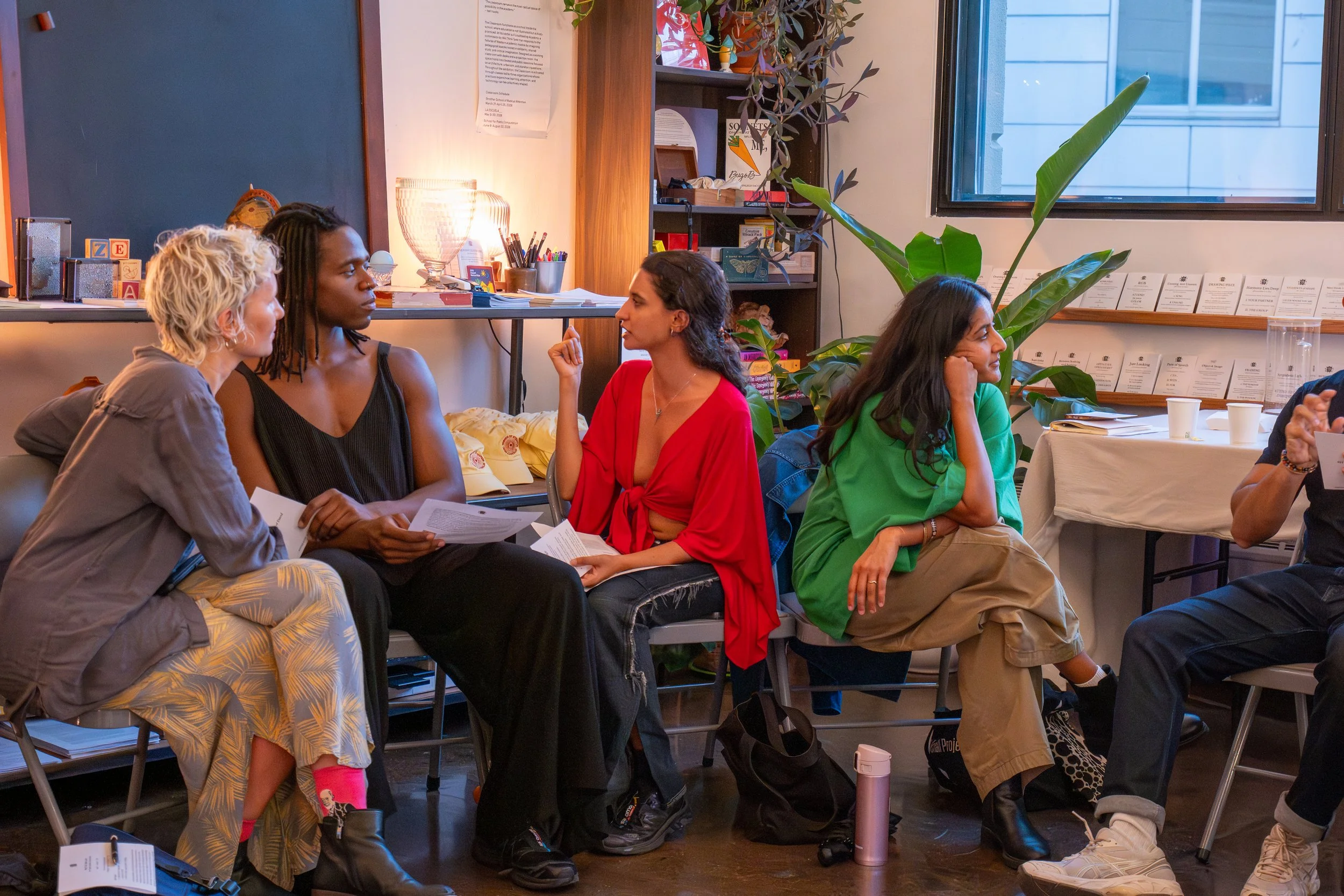
Attention Lab: URBAN SPACE
Attention Lab workshops are collective participatory experiments in the powers of human attention. Through group practices and guided discussions, we seek to understand what attention is, what it can do, and why it's worth protecting.
Urban space is defined by the human life, social interaction, and community experiences that happen within it rather than just its physical buildings. What lays the foundation for urban space as we perceive it?

Sidewalk Study: TRUE BLUE
From sea to sky, blue is one of our most beloved colors. Its most distinguished hue — ultramarine — is a pigment that was once considered more precious than gold. Spanning rare to banal, physical to emotional, natural to man-made, blue carries within it many histories.
Color enshrines our lives, inspires and enables our art, and can both command and personify our emotions. It has also been at the center of wars and colonial subjugation in humanity’s ongoing pursuit of its raw material. So, is it true that we make blue? Or could it be that blue makes us?
Part of this Study will take place ON THE STATEN ISLAND FERRY!
Text: Ravi Mangla’s “True Blue: A Brief History of Ultramarine”
Date: Monday, September 14 at 7pm
Location: Whitehall Terminal with Shrin & Samvit
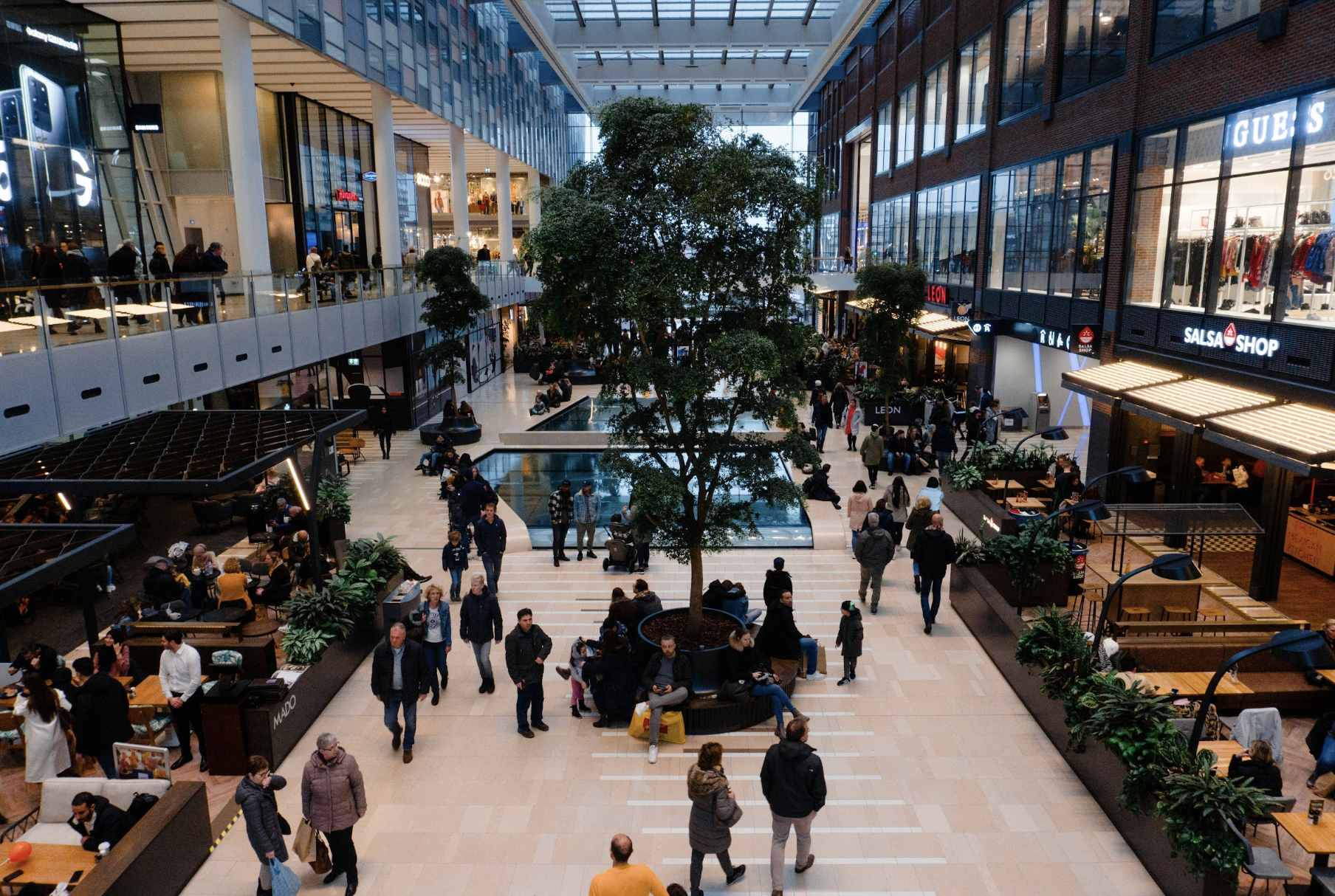
Sidewalk Study SILICON VALLEY, CA : ON THE MALL
“They float on the landscape like pyramids to the boom years, all those Plazas and Malls and Esplanades,” writes Joan Didion of the American mall. Shopping centers— those strange, in-between spaces that are at once odes to consumerism, pulses on the latest fashion trends, gathering places, dining locales, and otherwise— are, in many ways, architectures of a bygone era.
But on the Peninsula, they continue to be live sites of inadvertent gathering and deliberate consumption, places that we can close-read to uncover our culture’s shared values and desires. Join us on September 13th for a walk through the Stanford Shopping Center accompanied by a set of readings: we’ll read Joan Didion’s nonfiction essay “On the Mall” (1975) alongside archival documents that reveal the history of the Stanford Shopping Center. As we historicize this site of shopping and gathering on the Peninsula, we will also turn a historian and critic’s eye to the mall as a marker of contemporary American consumerism and identity.
Text: Joan Didion’s “On the Mall” from The White Album
Date: Sunday, September 13 at 1pm
Location: Stanford Shopping Center in Palo Alto, CA
If you are interested in joining the Silicon Valley, CA mailing list, fill out this form.
ATTENTION ACTIVISM 101 [ONLINE] (Session 2/3)
Attention is the touchstone problem of our age. Over the last twenty years, an unprecedented concentration of technical and financial power has successfully monetized human attention. The harms of this new system — in effect, the "fracking" of our most intimate selves — are familiar to all. Less widely understood is the nature of the movement that has emerged to fight back against this historic injustice: ATTENTION ACTIVISM.
In this course, we will survey the intellectual and practical foundations of the nascent ATTENTION ACTIVISM movement. We'll draw on texts by Karl Marx, Guy Debord, Shoshana Zuboff, Tim Wu, and Yves Citton among others. What do the extractive incursions of the Attention Economy mean for shared life in the twenty-first century — and how are communities of activists already working to resist them?

Sidewalk Study AUSTIN, TX: GOOD ENOUGH
We are surrounded by invitations to become someone new through what we buy. Fashion makes this promise especially tangible: a new garment can offer novelty, belonging, status, self-expression, or the possibility of a different self. But when desire is continually renewed, how do we ever arrive at enough?
Drawing from Aja Barber’s critique of fashion, capitalism, and consumer culture, this Study considers the forces that shape what we want and what separates the pleasure of clothing from the compulsion to continually acquire it. Moving through the shops of South Congress, we’ll attend pay attention to the subtle ways desire is produced, and consider what it might mean to recognize enough when we have it.
Text: Aja Barber’s Consumed: The Need for Collective Change: Colonialism, Climate Change, and Consumerism
Date: Thursday, September 10, 2026
Location: South Congress, Austin
If you are interested in joining the Austin, TX mailing list, fill out this form.
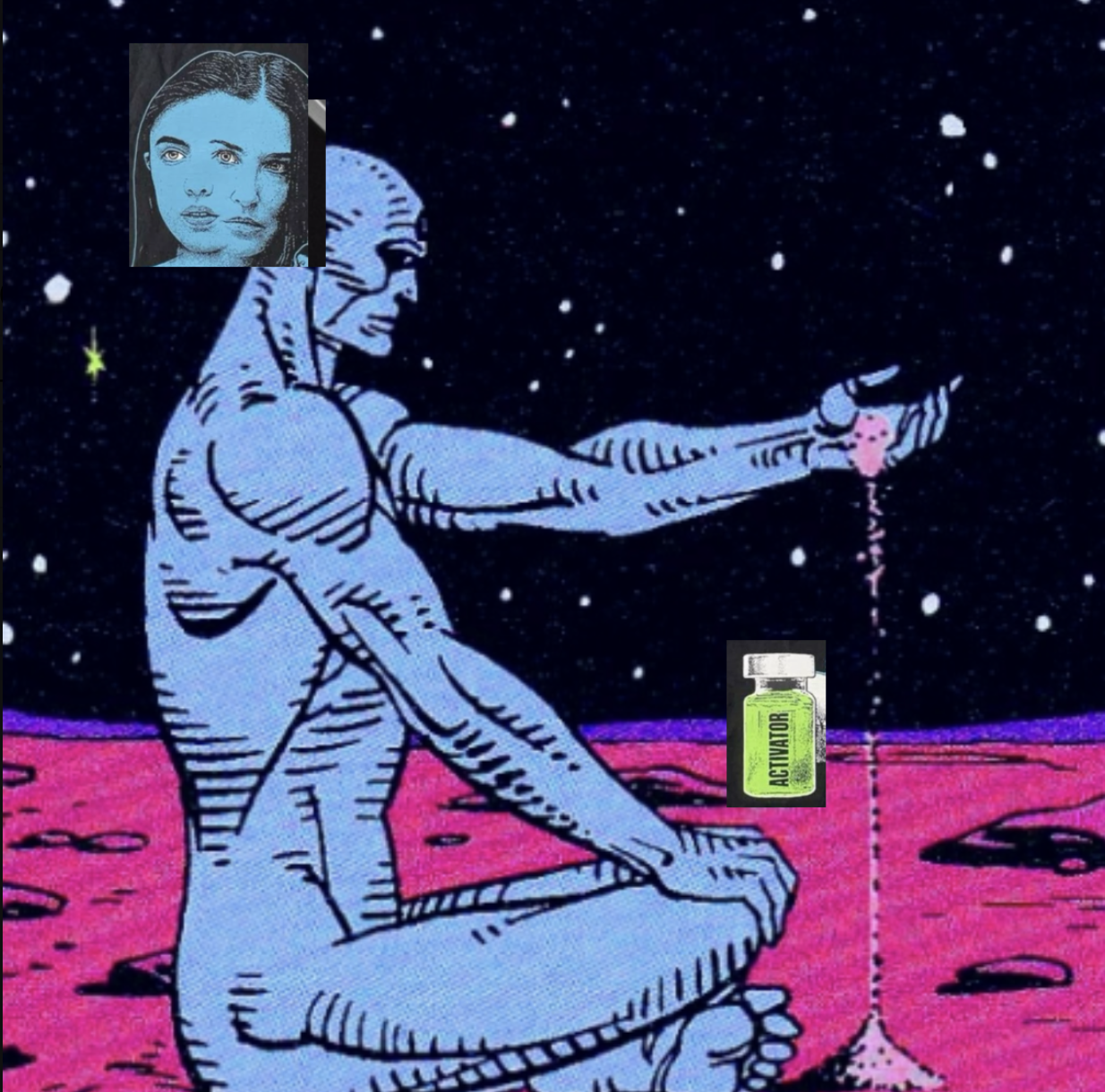
Sidewalk Study: IN VOGUE, IN VITRO
In an intensifying culture of bodily optimization and de-aging, our clothes aren't the only things capable of falling out of fashion; our bodies might, too. In this Study, we’ll explore cultural viewpoints spanning the 10th CE Chinese practice of footbinding to more contemporary views on body image in Coralie Fargeat’s The Substance.
In this Study, we explore how particular ages, figures, shapes, and physiques become culturally desirable, and what it feels like when the body we inhabit moves beyond them.
Text: Coralie Fargeat's “The Substance” Screenplay& Adeline Yen Mah’s Chinese Cinderella
Date: Wednesday, September 9 at 7pm
Location: Lower East Side with Anha & Cherilyn

Sidewalk Study ST. LOUIS, MO: CAMOUFLAGE
As our world becomes evermore surveilled, some people are choosing to fight back with fashion. This text explores the intersection between clothing and protection in the face of technological oversight.
What does it mean to hide, to blend in, to stand out, to fight back? Join this practice to reflect on these ideas and put what you learn into action with some adversarial clothing of your own.
Text: “Adversarial Clothing” by Amelia Hill (2026)
Date: Saturday, September 5 at 4pm Central
Location: Alton, IL with Chris and Michelle
If you are interested in joining the St. Louis, MO mailing list, fill out this form.
ATTENTION ACTIVISM 101 [ONLINE] (Session 1/3)
Attention is the touchstone problem of our age. Over the last twenty years, an unprecedented concentration of technical and financial power has successfully monetized human attention. The harms of this new system — in effect, the "fracking" of our most intimate selves — are familiar to all. Less widely understood is the nature of the movement that has emerged to fight back against this historic injustice: ATTENTION ACTIVISM.
In this course, we will survey the intellectual and practical foundations of the nascent ATTENTION ACTIVISM movement. We'll draw on texts by Karl Marx, Guy Debord, Shoshana Zuboff, Tim Wu, and Yves Citton among others. What do the extractive incursions of the Attention Economy mean for shared life in the twenty-first century — and how are communities of activists already working to resist them?
ATTENTION ACTIVISM 101 [ONLINE] (Session 3/3) EU/UK
Attention is the touchstone problem of our age. Over the last twenty years, an unprecedented concentration of technical and financial power has successfully monetized human attention. The harms of this new system — in effect, the "fracking" of our most intimate selves — are familiar to all. Less widely understood is the nature of the movement that has emerged to fight back against this historic injustice: ATTENTION ACTIVISM.
In this course, we will survey the intellectual and practical foundations of the nascent ATTENTION ACTIVISM movement. We'll draw on texts by Karl Marx, Guy Debord, Shoshana Zuboff, Tim Wu, and Yves Citton among others. What do the extractive incursions of the Attention Economy mean for shared life in the twenty-first century — and how are communities of activists already working to resist them?

Sidewalk Study CLEVELAND, OH: NOT BACK TO NORMAL
Portals aren't always a matter of choice, or even of noticing you've crossed one. In "The Pandemic is a Portal," Arundhati Roy argues that COVID-19 forced a rupture that halted global capitalism, exposed the fragility of the world's most powerful nations, and stripped away the illusion of "normal" life as something stable or inevitable. She refuses nostalgia for what came before, insisting the crisis is not an interruption to survive but a gateway — one we can drag our old prejudices, greed, and dead ideas through, or one we can walk through "lightly, with little luggage," ready to imagine something else entirely. Join us in sitting with a portal none of us asked to walk through and can't walk back out of. What have you been dragging through the door with you that you could set down instead?
Text: Arundhati Roy’s “The Pandemic is a Portal”
Date: Sunday, August 30 at 2pm
Location: Lakewood Park, Cleveland, OH with Aditi & Rob
If you are interested in joining the Cleveland, OH mailing list, fill out this form.
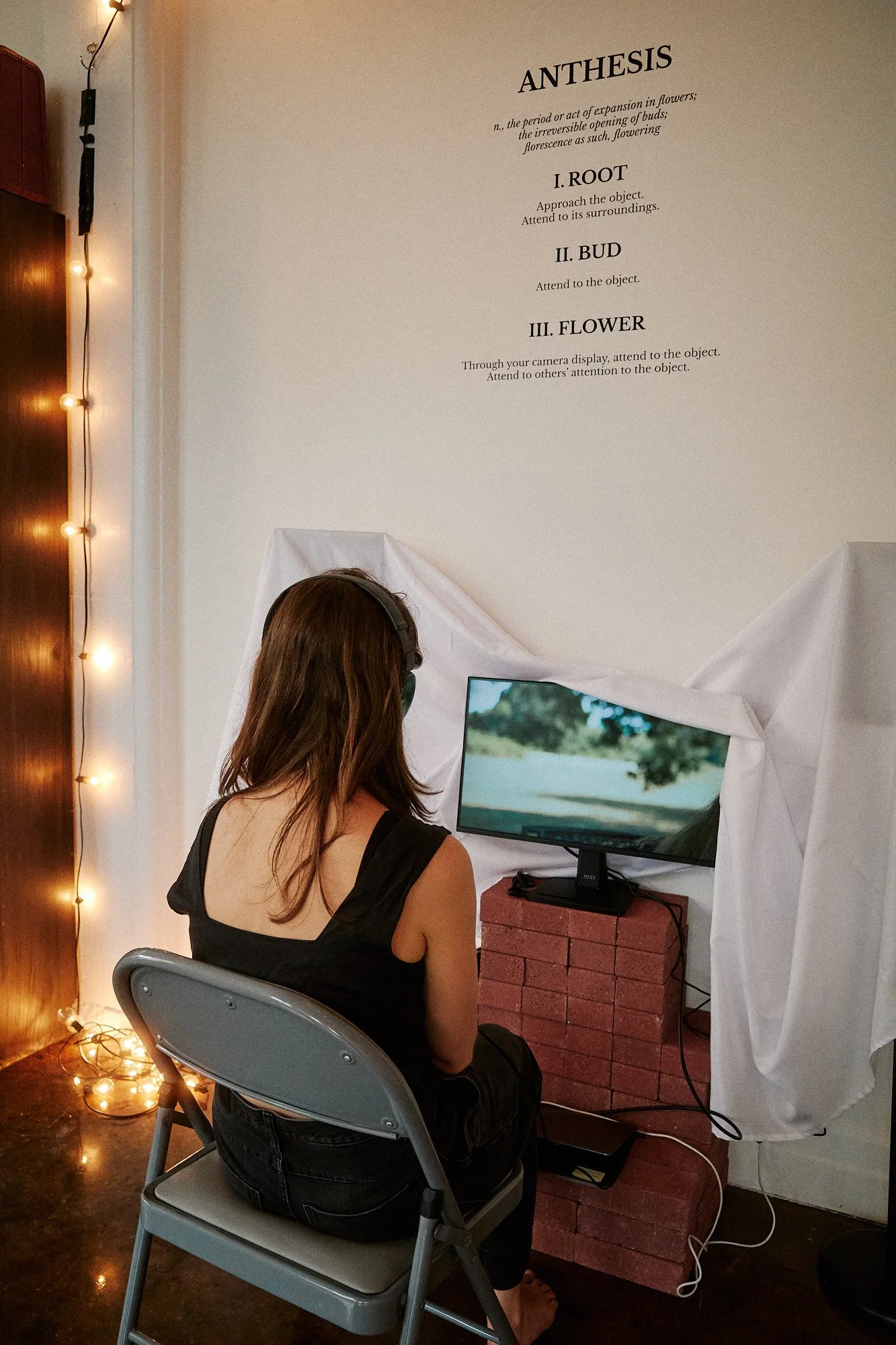
Attention Lab: Camera Vision
Please join the School of Attention for an Attention Lab in conjunction with our summer exhibition, When The Camera Looks.
Attention Lab workshops are collective participatory experiments in the powers of human attention. Through group practices and guided discussions, we seek to understand what attention is, what it can do, and why it's worth protecting.
Unless stated otherwise, all Labs take place in the SoRA Sanctuary at 55 Washington St., Ste. 736 in DUMBO, BK.
You can register for upcoming labs on the Attention Labs page.
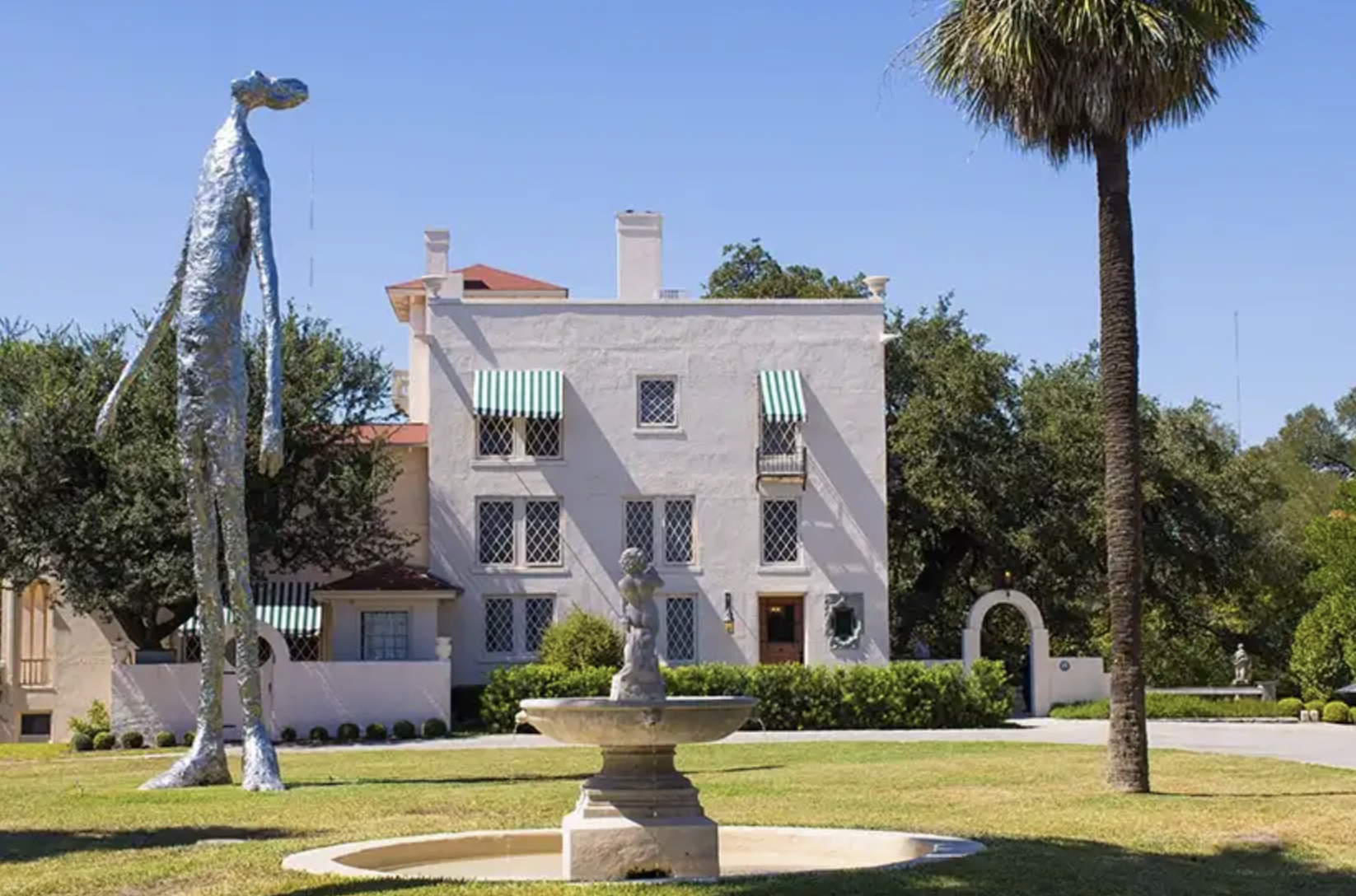
Sidewalk Study AUSTIN, TX: THE LANGUAGE OF PLACE
What makes certain places feel welcoming, alive, or deeply memorable? How does the design of a place shape the way we gather, move, rest, and relate?
In A Pattern Language, architect Christopher Alexander argues that the places we love are rarely accidental. They are shaped by recurring “patterns”— timeless design principles that support human flourishing, from the paths we follow and the rooms we gather in to the edges where gardens meet buildings and the places we naturally pause. Rather than prescribing a single way to build, Alexander offers a language for observing why some places invite connection while others leave us feeling disconnected.
In this Study, we’ll explore the relationship between attention and the built environment. Together we’ll wander the grounds of Laguna Gloria, reading the landscape through Alexander’s patterns and asking how architecture, gardens, pathways, thresholds, and gathering spaces influence the way we experience one another and the more-than-human world. Along the way, we’ll consider what it might mean to design places that cultivate belonging, beauty, and aliveness.
Text: Christopher Alexander, Sara Ishikawa, Murray Silverstein’s A Pattern Language
Date: Thursday, August 27 at 6:30pm
Location: The Contemporary Austin - Laguna Gloria in Austin, Texas with Chris and Leah
If you are interested in joining the Austin, TX mailing list, fill out this form.

SIMONE WEIL (3/3)
If there were a patron saint of radical attention, it would be the 20th century activist philosopher Simone Weil. Weil believed that existence itself is God's act of self-renunciation – and that by "giving up being the center of the world in imagination," we participate in the ongoing creation of reality, and especially of our neighbor.
Since she also believed the deepest truths are “experimental,” needing to be lived before they can be verified, this class will be organized as a shared experiment in the hypothetical reality of creative self-renunciation. We’ll adopt practices of attention inspired by Weil’s writing – meditation, attending to others, and patience – in order to reflect on and share from the experience of what Weil calls the “void.”
For intellectual exercises, we will read Weil’s work focusing on particular guiding metaphors - water, centers/centering, and poetry – feeling for how our symbols and ways of attending either add dimension to our experience of reality or flatten it.
Our intention is that between Weil's intellectual models, homeopathic doses of the void, and the world of our shared experiences, something sparks: a heightened capacity to be here, at the center of the world's re-creation.
Led by Bert and Emma Fitzgerald, co-organizers of the Simone Weil House in Portland, OR.
Wednesdays, 6:30-9:00pm
August 12th-26th
Our courses cost $250, with an Advanced rate for students with an income above 100k. We also offer a Discounted rate for students with constraining circumstances.
Please see our Refund Policy HERE.
Additionally, we offer three tuition-waiver scholarships per course. To apply for a scholarship, click HERE.

Sidewalk Study SILICON VALLEY, CA : THRESHOLDS
The French philosopher Gaston Bachelard’s book The Poetics of Space suggests that spaces — houses, shells, drawers, nests, and the corners of things — are far more than physical; they are laden with soul-making and dreamwork. In a practice he calls “topoanalysis,” Bachelard encourages us to entwine our understandings of physical space and personal identity.
In the chapter “The Dialectics of Inside and Outside,” the philosopher remarks on thresholds, interrogating the image of the door (a potent portal). “If one were to give an account of all the doors one has closed and opened, of all the doors one would like to re-open,” Bachelard writes, “one would have to tell the story of one’s entire life.”
What doors and other thresholds shape our lives and senses of self? How do our experiences of physical space and psychic space intersect and create one another? Join us at the downtown Redwood City archway to consider these and other questions through a Sidewalk Study and discussion, following Bachelard’s lead.
Text: Gaston Bachelard’s The Poetics of Space
Date: Wednesday, August 26 at 6:00 PM
Location: Redwood City Archway, Redwood City, CA with Erika & Peter
ATTENTION ACTIVISM 101 [ONLINE] (Session 2/3) EU/UK
Attention is the touchstone problem of our age. Over the last twenty years, an unprecedented concentration of technical and financial power has successfully monetized human attention. The harms of this new system — in effect, the "fracking" of our most intimate selves — are familiar to all. Less widely understood is the nature of the movement that has emerged to fight back against this historic injustice: ATTENTION ACTIVISM.
In this course, we will survey the intellectual and practical foundations of the nascent ATTENTION ACTIVISM movement. We'll draw on texts by Karl Marx, Guy Debord, Shoshana Zuboff, Tim Wu, and Yves Citton among others. What do the extractive incursions of the Attention Economy mean for shared life in the twenty-first century — and how are communities of activists already working to resist them?
ATTENTION ACTIVISM 101 [ONLINE] (Session 3/3)
Attention is the touchstone problem of our age. Over the last twenty years, an unprecedented concentration of technical and financial power has successfully monetized human attention. The harms of this new system — in effect, the "fracking" of our most intimate selves — are familiar to all. Less widely understood is the nature of the movement that has emerged to fight back against this historic injustice: ATTENTION ACTIVISM.
In this course, we will survey the intellectual and practical foundations of the nascent ATTENTION ACTIVISM movement. We'll draw on texts by Karl Marx, Guy Debord, Shoshana Zuboff, Tim Wu, and Yves Citton among others. What do the extractive incursions of the Attention Economy mean for shared life in the twenty-first century — and how are communities of activists already working to resist them?